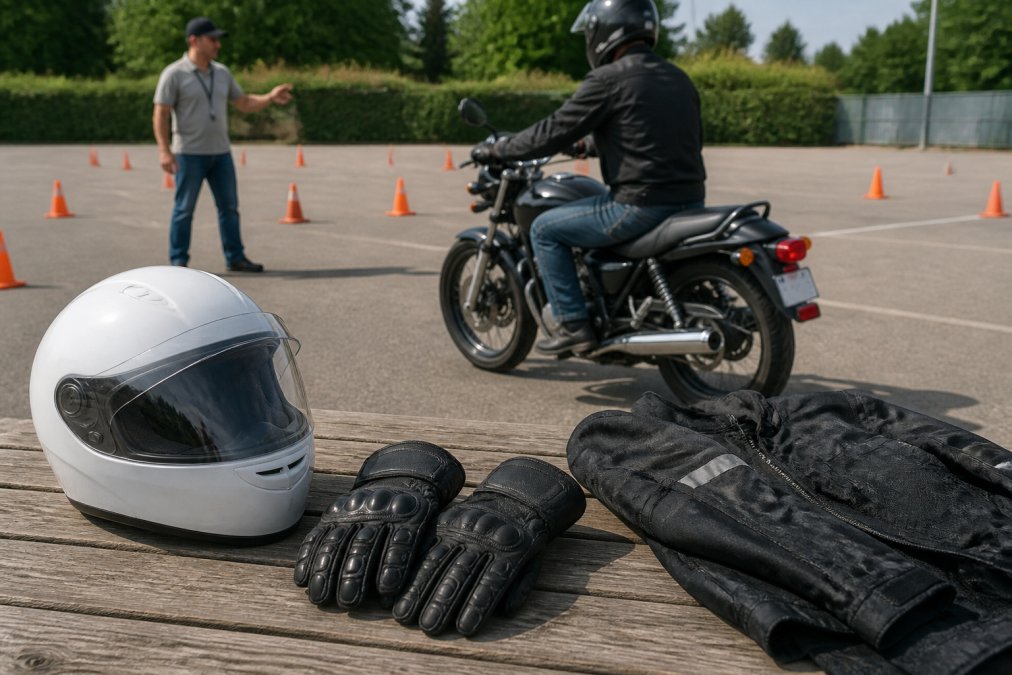
 blog
blog
Motorcycle Training Course for Commuters: 2026 Guide
Table of Contents
- Why a Motorcycle Training Course for Commuters Beats Learning on Your Own
- What Commuters Actually Need From Rider Training
- Motorcycle Defensive Riding Techniques You'll Use Every Commute
- MSF Basic RiderCourse Cost: What You're Paying For
- Advanced Rider Training for Urban Environments
- Eligibility, Prerequisites, and Licensing and DMV Waivers
- Gear, Maintenance, and Route Planning for Daily Riders
- Common Mistakes Commuters Make After Course Completion
- Frequently Asked Questions
Last Updated: September 21, 2026
Why a Motorcycle Training Course for Commuters Beats Learning on Your Own
A motorcycle training course for commuters is a structured, instructor-led program that teaches the skills required to ride safely in daily traffic, not just pass a test.
What Commuters Actually Need From Rider Training
Commuter-focused rider training is built around traffic, not tricks. The difference from a general beginner course comes down to where and how you practice.
Skills That Matter in Daily Traffic
Five capabilities separate a confident commuter from a nervous one:
- Defensive riding: reading driver behavior two cars ahead, not one
- Braking techniques: progressive front-brake pressure on wet pavement
- Cornering and traction: managing painted lines, metal plates, and gravel
- Throttle control: smooth inputs at low speed in stop-and-go traffic
- Hazard avoidance: swerving and stopping when a door opens or a car turns left
Course Overview and Objectives
A well-designed commuter course sets clear objectives before you start the engine:
- Demonstrate controlled low-speed maneuvering
- Execute emergency braking from highway speed
- Identify and respond to traffic hazards in real time
- Complete a skill assessment that satisfies state licensing requirements
Motorcycle Defensive Riding Techniques You'll Use Every Commute
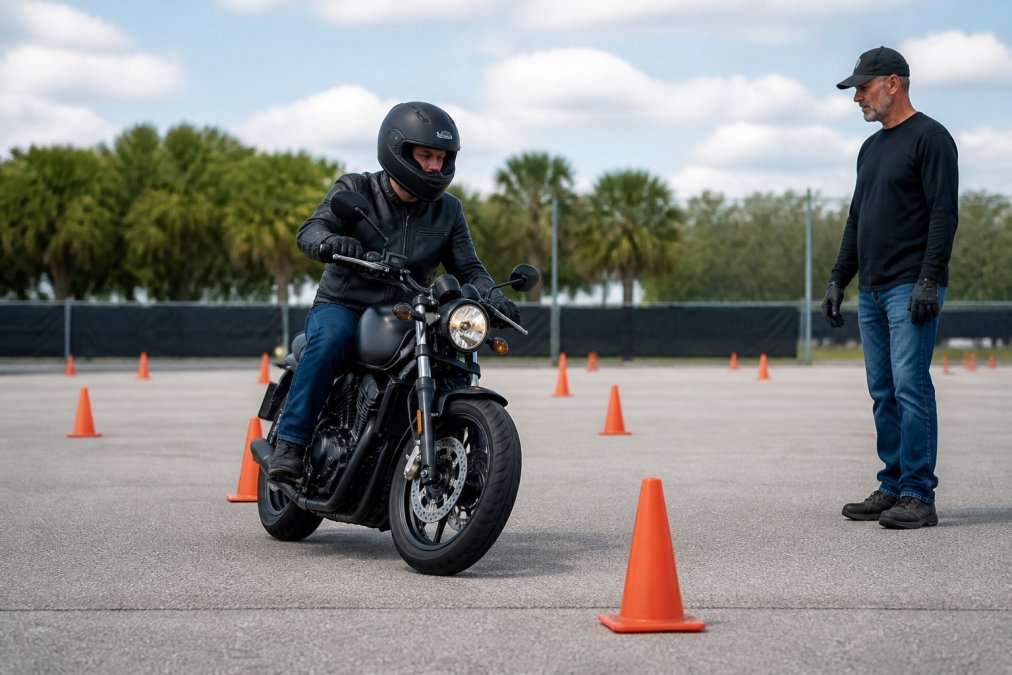
Defensive riding means assuming other drivers do not see you, then positioning yourself so their mistakes cannot hurt you. It is the most valuable skill a commuter can build, and the one most licensing-focused courses skim past, because their goal is getting you through a test, not a Tuesday morning merge.
The 12-Second Rule and Following-Distance Math
The 12-second rule means scanning at least 12 seconds ahead, roughly a full block in city traffic, about a quarter mile at highway speed. The point is reading traffic two decisions ahead instead of reacting to the bumper in front of you.
- Minimum 2 seconds behind the vehicle ahead in dry conditions
- 3 seconds in rain, on painted lines, or on metal bridge grating
- 4 seconds or more when a tailgater is behind you, so you have room to brake gently instead of abruptly
Intersection Mechanics: The Highest-Risk Zone on Your Route
Most urban motorcycle crashes happen at intersections, and the left-turn-across-your-path scenario is the classic one. Defensive habits that change outcomes:
- Cover the brake through every intersection, fingers on the lever, foot over the pedal, ready before you need it.
- Change lane position as you approach. Move toward the lane the turning driver is coming from so you are more visible and have more room to swerve right.
- Watch the front wheels, not the driver's face. A wheel that starts rolling tells you the car is moving before the driver's eyes do.
- Scan left-right-left even on a green light. A stale green means cross traffic may be running the red.
Lane Filtering: What Is Legal Where You Ride
Lane filtering, moving between stopped or slow-moving lanes, is legal in a small number of states and prohibited in most. California was the first to formally legalize it, and a handful of other states have since passed limited versions. In most states, filtering is a ticketable offense and, in some, an automatic fault finding if a crash occurs.
Hazard Avoidance Drills You Can Practice Alone
Course time is limited; the gains come from what you rehearse afterward. Three drills that map to commuting:
- Emergency stop from 30 mph in an empty lot, working up to threshold braking without locking the front.
- Swerve-and-recover around a cone or water bottle, then immediately straighten and brake, the sequence matters, because real hazards rarely let you pick one response.
- Slow-speed figure-eights inside a parking space footprint, which builds the clutch and rear-brake control that stop-and-go traffic demands.
MSF Basic RiderCourse Cost: What You're Paying For
The MSF Basic RiderCourse cost varies by provider, location, and whether motorcycles and helmets are included. Confirm current pricing with the school you choose, but understand what drives the number.
What Actually Drives the Price
Four variables move the fee more than anything else:
- What the provider supplies. A course that furnishes the motorcycle, helmet, and gloves costs more to run than one requiring you to bring your own bike. For a brand-new commuter with no motorcycle, a supplied-bike course is usually the better deal even at a higher sticker price.
- Class size and instructor ratio. Smaller classes cost the provider more per student. That cost shows up in the fee, and it is the biggest quality signal in the price.
- Location and facility. A dedicated range with a paved, marked course costs more to maintain than a borrowed parking lot.
- Scheduling. Weekend and evening sections often carry a premium over weekday sessions.
What the Fee Should Include
A quality course bundles more than seat time. Before you pay, confirm the fee covers:
- Certified instruction with a low student-to-instructor ratio
- Motorcycles and helmets provided for training
- The MSF eCourse, completed before your first riding day
- A completion card that can satisfy your state's licensing requirement
Why Class Size Is the Hidden Cost Variable
Tampa Motorcycle Training caps classes at eight students, which matters more than most riders realize. With eight riders, an instructor can watch each person's braking and cornering and correct it in the moment. In a class of twenty, you get a fraction of that attention, and for a commuter whose goal is traffic judgment, that attention is the product you are buying.
The Commuter Cost Math
It helps to frame the fee against what commuting on two wheels saves. If a daily round-trip commute is 30 miles and your car gets 30 mpg, you burn roughly a gallon a day. A motorcycle returning 50 to 60 mpg cuts that fuel cost by roughly a third to a half, before reduced wear on the car.
Advanced Rider Training for Urban Environments
- Lane positioning strategy: where to sit in a lane to stay visible
- Intersection management: the highest-risk zone for commuters
- Wet-weather braking: longer following distances and gentler inputs
- Multi-lane merging: reading traffic flow before you commit
Experienced riders often assume they do not need this. In practice, riders returning after years away benefit most. Habits fade, and traffic has changed.
Eligibility, Prerequisites, and Licensing and DMV Waivers
Eligibility for a beginner commuter course is simpler than most people expect. You generally need to be at least 16, hold a valid driver's license or learner's permit, and be able to balance and ride a bicycle.
Prerequisites to confirm before you register:
- A valid government-issued ID
- Proper riding gear (long sleeves, long pants, over-the-ankle boots, eye protection)
- Completion of the online eCourse before your first riding session
Gear, Maintenance, and Route Planning for Daily Riders
Commuting on two wheels is a system, and gear, maintenance, and route choice are the three parts most riders neglect. Get these right and the ride gets safer and cheaper.
Safety Gear Requirements and Weather-Ready Commuting Gear
Helmet requirements in Florida mean riders 21 and older may ride without a helmet if they carry insurance, but a full-face helmet remains the best protection you can wear. For commuters, add:
- Waterproof riding jacket with armor at shoulders and elbows
- Gloves with knuckle protection
- Over-ankle boots with a slip-resistant sole
- Rain gear you can pack in a tank bag
Motorcycle Maintenance for Daily Riders
Daily riding wears components faster than weekend riding. Check weekly:
- Tire pressure and tread depth
- Chain tension and lubrication
- Brake pad thickness
- Lights and turn signals
Route Planning and Traffic Management
Route planning for a commuter means choosing the road with fewer conflict points, not the fastest one. A surface street with predictable signals often beats a highway with aggressive merging.
Traffic management habits that help:
- Leave 10 minutes earlier to avoid riding rushed
- Avoid the left lane in heavy traffic, where drivers drift
- Plan a backup route for days with rain or events
| Commute Challenge | Skill or Habit | Where You Learn It |
|---|---|---|
| Sudden traffic stops | Progressive braking | On-bike instruction |
| Left-turners cutting across | Hazard scanning | Defensive riding drills |
| Wet pavement | Traction management | Skill assessment |
| Blind spots | Lane positioning | Traffic practice |
| Fatigue on long rides | Route planning | Self-managed |
Common Mistakes Commuters Make After Course Completion
The biggest mistake riders make after finishing a course is stopping practice. Course completion is a certification, not a finish line.
Watch for these:
- Riding only on perfect days, then facing rain with no wet-weather experience
- Skipping the pre-ride check, assuming the bike is always ready
- Overriding your skill level, especially in the first month
- Ignoring gear, because the ride is short
- Never practicing emergency braking after the course ends
Frequently Asked Questions
What is the 12-second rule on a motorcycle?
The 12-second rule is a scanning technique where you look ahead to a point you'll reach in 12 seconds. This gives you time to spot hazards, adjust speed, and plan an escape route. In commuter traffic, it helps you anticipate sudden stops, lane changes, and intersections before they become emergencies. Pair it with a 2-second following distance and constant mirror checks to build a complete awareness picture.
How much does an MSF Basic RiderCourse cost?
Pricing for an MSF Basic RiderCourse depends on the provider, location, and whether motorcycles and helmets are included. Some courses bundle the MSF eCourse, range time, and the DMV waiver. Because costs vary, check with Tampa Motorcycle Training directly for current pricing and what's included in the Basic Rider Course package.
Are there specific motorcycle training modules for heavy traffic?
Yes. Commuter-focused training covers lane positioning, merging, filtering awareness, throttle control at low speeds, and hazard avoidance in dense traffic. Defensive riding techniques like the 12-second rule and escape route planning are core modules. Look for courses that dedicate range time to slow-speed maneuvering and braking techniques, since those skills matter most in stop-and-go commuting.
How does a motorcycle safety course help with insurance premiums?
Many insurers offer discounts to riders who complete an approved safety program, such as an MSF-recognized course. The discount amount varies by insurer and policy. Beyond premiums, completing a certified course can waive the DMV riding skills test in Florida, which saves you time and reduces the pressure of testing at the DMV.
Commuting on a motorcycle is one of the most efficient and enjoyable ways to move through a city, but it rewards preparation. Tampa Motorcycle Training offers an MSF-certified Basic Rider Course with small classes capped at eight students, motorcycles provided, and a completion path that can waive the DMV riding skills test. If you are ready to build real commuting skills instead of guessing your way through traffic, register now and earn your endorsement in two days.