 ultimate-guide
What to Expect in the MSF Course: A 2026 Guide
Table of Contents
- What to Expect in the MSF Course: An Overview
- How Long Is the MSF Course?
- Classroom Instruction and the MSF eCourse
- Range Exercises: What You'll Practice on the Bike
- What to Wear to Motorcycle Class
- MSF Course Difficulty and Passing Criteria
- How to Prepare: Physical, Mental, and What to Bring
- What Happens After the Course: Your Endorsement and Beyond
- Frequently Asked Questions
Last Updated: September 30, 2026
What to Expect in the MSF Course: An Overview
The MSF course is a standardized, two-day training program that takes complete beginners from never touching a motorcycle to earning a completion card that waives the riding skills test at the DMV. According to the Motorcycle Safety Foundation's rider training overview, the Basic Rider Course combines classroom instruction, eCourse modules, and hands-on range exercises designed to build real riding competence.
The Basic Rider Course at a Glance
The Basic Rider Course is the entry-level program most riders take to earn their motorcycle endorsement. It splits time between classroom instruction and practical range exercises, with motorcycles and helmets typically provided. You don't need prior riding experience, your own bike, or a learner's permit in most cases. The course caps small for a reason: personalized coaching is what helps beginners through the clutch-control learning curve.
How Long Is the MSF Course?
The MSF course typically runs about 15 to 17 hours spread across two days, though exact schedules vary by provider. Most programs pair a few hours of classroom or eCourse work with two full range sessions. The Motorcycle Safety Foundation's rider training overview describes the Basic Rider Course as roughly five hours of classroom or eCourse instruction plus about ten hours of range time, which is where the 15-to-17-hour total comes from.
Here's how those hours usually break down:
| Block | Typical length | What happens |
|---|---|---|
| eCourse (online, before Day 1) | 3-5 hours | Self-paced modules on risk, controls, and traffic strategy |
| Day 1 classroom | 1-2 hours | Review, paperwork, coach-led discussion |
| Day 1 range | 4-5 hours | Friction zone, clutch control, basic maneuvers |
| Day 2 range | 4-5 hours | Swerving, emergency stops, cornering, skills evaluation |
| Written exam | 30-45 minutes | Multiple choice, taken on-site or online depending on provider |
Why the Schedule Varies So Much
Three things drive the differences you'll see between providers:
- eCourse vs. in-person classroom. Providers that use the MSF eCourse can compress Day 1 classroom time to a short review. Providers that still teach classroom in person add two to four hours of seat time before anyone touches a bike.
- Range capacity. A range capped at eight students moves faster than one with twelve. More students means more waiting between drills, which stretches the day.
- Weather make-up policy. Rain delays are common. Ask whether your provider builds a make-up day into the schedule or reschedules you into the next open session, because that affects how long the course takes in real terms.
What the Two Days Actually Feel Like
If you're comparing a two-day weekend course against a three-day weekday format, the total hours are usually the same. The three-day version just spreads the range time across shorter sessions, which some riders find easier on their bodies.
Classroom Instruction and the MSF eCourse
Classroom instruction covers the mental side of riding: risk awareness, lane positioning, defensive riding strategies, and traffic safety principles. The MSF eCourse is an online module you complete before the range portion, and it replaces much of the traditional in-person classroom time.
Topics include:
- Motorcycle controls and their functions
- Pre-ride inspection procedures
- Alcohol, fatigue, and distraction risks
- Crash-avoidance strategies
- Lane positioning and following distance
Range Exercises: What You'll Practice on the Bike
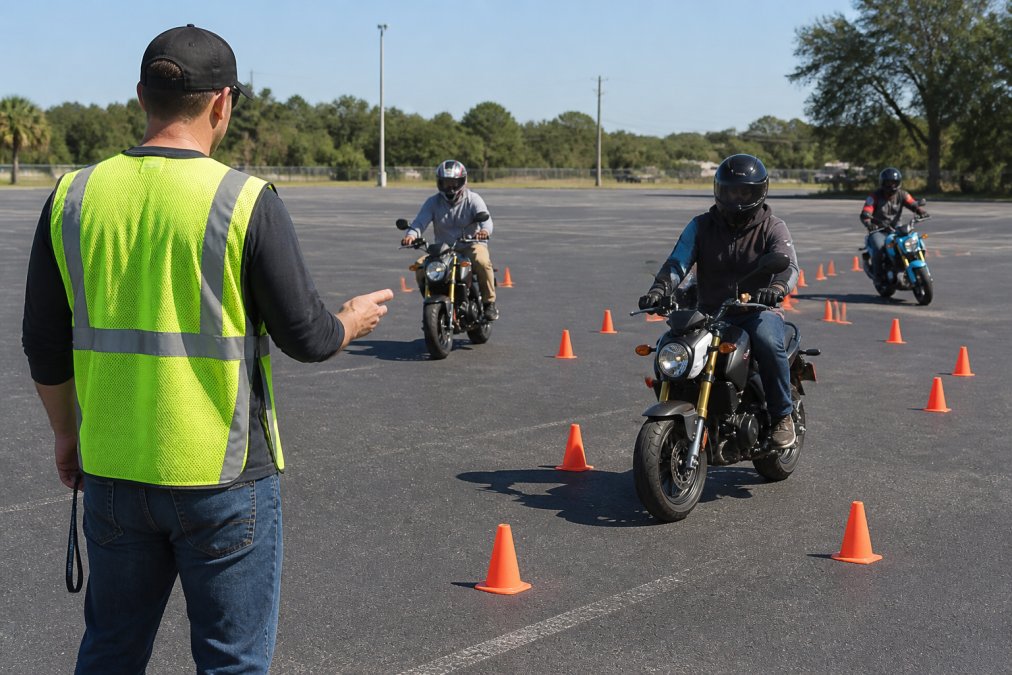
Range exercises are where the real learning happens. You'll spend most of your range time on a closed course practicing low-speed control, braking, and swerving under a rider coach's supervision.
Core Riding Drills and Maneuvers
The curriculum builds progressively, so each drill prepares you for the next:
- Motorcycle familiarity and controls - locating the clutch, throttle, brakes, and turn signals before you move
- Friction zone and clutch control - creeping forward without stalling, the single most important beginner skill
- Riding posture and head checks - where to look, how to sit, and why head position controls the bike
- Throttle and braking - smooth acceleration and controlled stops
- Swerving and emergency stop - the two maneuvers that save lives in traffic
- Counter-steering and maneuverability - weaving through cones and tight turns
- Skills evaluation - a scored run of the core maneuvers
What to Wear to Motorcycle Class
What to wear to motorcycle class matters more than most beginners expect. You need over-the-ankle boots, long pants (denim or heavier), a long-sleeved shirt or jacket, and full-finger gloves. Bring eye protection and a DOT-approved helmet, though many providers loan helmets. Prioritizing these basic safety requirements establishes a foundation for future motorcycle equipment upgrades that can enhance both your comfort and control on the road.
- Over-the-ankle boots. The ankle is the most commonly injured joint in low-speed drops, and a drop is exactly what happens during friction-zone drills. Leather boots with a defined heel are ideal. Work boots work. Hiking boots usually don't, because the sole is too grippy on the pegs.
- Long pants, denim or heavier. Denim resists abrasion for a few seconds of slide. Leggings, joggers, and synthetic athletic pants melt or tear. If you already own riding pants with knee armor, wear them.
- Long-sleeved shirt or jacket. A textile or leather riding jacket is best. A heavy long-sleeve shirt is the minimum. Avoid loose sleeves that can catch on a mirror or lever.
- Full-finger gloves. Leather or textile riding gloves with a palm slider. Gardening gloves and batting gloves don't hold up. Your hands are the first thing that hits the ground in a low-side.
- Eye protection. A face shield, goggles, or shatter-resistant sunglasses. If you wear a loaner helmet with a scratched shield, bring your own eye protection as a backup.
- Helmet. A DOT-approved helmet is required. Many providers loan them, but sizes run out. If you own one that fits, bring it.
The Physical Toll Nobody Warns You About
This is the part most guides skip. You'll spend four to five hours per range day in full gear, in the sun, on a bike that requires constant low-speed balance. That's a real physical load, and it's the number one reason beginners fade on Day 2.
Register for the Basic Rider Course →
What actually helps:
- Hydrate before you're thirsty. Bring a large water bottle and refill it at every break. Dehydration shows up as poor clutch control long before you feel thirsty.
- Choose breathable gear. Mesh textile jackets with armor move air and still protect. A heavy leather jacket in summer heat will cook you.
- Wear moisture-wicking layers underneath. Cotton holds sweat and chafes. A synthetic base layer keeps you drier and cooler.
- Break in your boots before Day 1. New boots plus eight hours on your feet equals blisters. Wear them around the house for a few days first.
- Bring a change of shirt. You'll want it for the drive home.
Bike Size and Weight: What to Expect on the Range
Training bikes are typically 250cc or smaller, which keeps them light and manageable. That matters because you'll be pushing, walking, and balancing the bike during drills, not just riding it. A 250cc trainer weighs roughly 300 to 350 pounds, which is light enough to recover from a tip-over without help.
MSF Course Difficulty and Passing Criteria
MSF course difficulty is low for most students who show up prepared, but it isn't automatic. You'll take a written exam and a scored skills evaluation, and you need to pass both.
The Written Exam and Skills Evaluation
The written test covers the eCourse and classroom material: traffic rules, risk management, and motorcycle operation. It's multiple choice, and most students pass on the first try if they've done the eCourse properly.
How to Prepare: Physical, Mental, and What to Bring
Physical fitness requirements are modest, but they exist. You'll be on a bike in the heat for hours, so basic stamina and balance help. If you can ride a bicycle and walk a few flights of stairs without trouble, you're physically ready.
- Arrive rested. Fatigue makes clutch control harder and anxiety worse.
- Watch videos of range exercises beforehand. Familiarity reduces fear.
- Ask questions early. Rider coaches would rather explain a drill twice than watch you struggle silently.
- Accept that stalling is part of learning. Every rider has stalled a bike.
What to bring:
- Your eCourse completion confirmation
- Valid government-issued ID
- Over-the-ankle boots, long pants, long sleeves, full-finger gloves
- Water and snacks for range breaks
- Sunscreen and a hat for classroom breaks
What Happens After the Course: Your Endorsement and Beyond
Finishing the course earns you a completion card, and that card waives the DMV riding skills test in Florida. You still need to visit the DMV to add the motorcycle endorsement to your license, but you skip the on-bike portion of the state test.
Frequently Asked Questions
How hard is it to pass the MSF course?
The MSF course is designed for beginners, so passing is achievable with focus and practice. The difficulty comes from mastering clutch control and slow-speed maneuvers, which are new skills for most riders. You must pass both a written exam and a riding skills evaluation. Instructors provide coaching throughout, and most students who pay attention and practice during the range exercises pass on their first attempt. The course is challenging but not impossible, especially with small class sizes that allow for personalized feedback.
What gear do I need to bring to the MSF course?
You will need to bring a DOT-approved helmet, eye protection, full-finger gloves, a long-sleeved shirt or jacket, long pants (no rips or holes), and over-the-ankle boots. Some training sites provide helmets, but it's best to check in advance. Avoid loose clothing that can catch on the bike. For what to wear to motorcycle class, prioritize safety and comfort: sturdy denim or riding pants, a durable jacket, and leather gloves are ideal. Bring water and sunscreen for the range portion, as you'll be outdoors for hours.
What happens if I fail the MSF riding test?
If you fail the riding skills evaluation, you will not receive your course completion card, which is required to skip the DMV riding skills test. Ask about retest policies before registering. Focus on the friction zone and head checks during practice to improve your chances.
Is the MSF course worth taking for experienced riders?
Yes, many experienced riders take the MSF course to refresh their skills or learn new techniques. The course covers defensive riding, emergency braking, and swerving, which are valuable even for seasoned riders. It also allows you to skip the DMV riding skills test and may qualify you for insurance discounts. If you're returning after years away from riding, the structured range exercises help rebuild confidence and correct bad habits. The classroom portion also updates you on current traffic safety strategies.
How long is the MSF course, and what is the daily schedule?
The MSF Basic Rider Course typically spans two days, with about 5 hours of classroom instruction and 10 hours of range exercises. Some providers offer a three-day format with shorter sessions. Each day combines classroom learning with hands-on riding. You'll start with basic controls and progress to more complex maneuvers like emergency stops and swerving. The schedule is intensive but designed to build skills progressively. Expect to be on the bike for several hours each day, so physical stamina helps.
What is the 12-second rule on a motorcycle?
The 12-second rule is a defensive riding technique that involves scanning 12 seconds ahead of your path. It helps you identify potential hazards early, such as intersections, debris, or vehicles entering your lane. By looking far ahead, you give yourself more time to react and adjust your speed or position. This rule is taught in the MSF course as part of traffic safety and is especially useful in urban areas with heavy traffic. Practicing this habit reduces reaction time and improves overall safety.