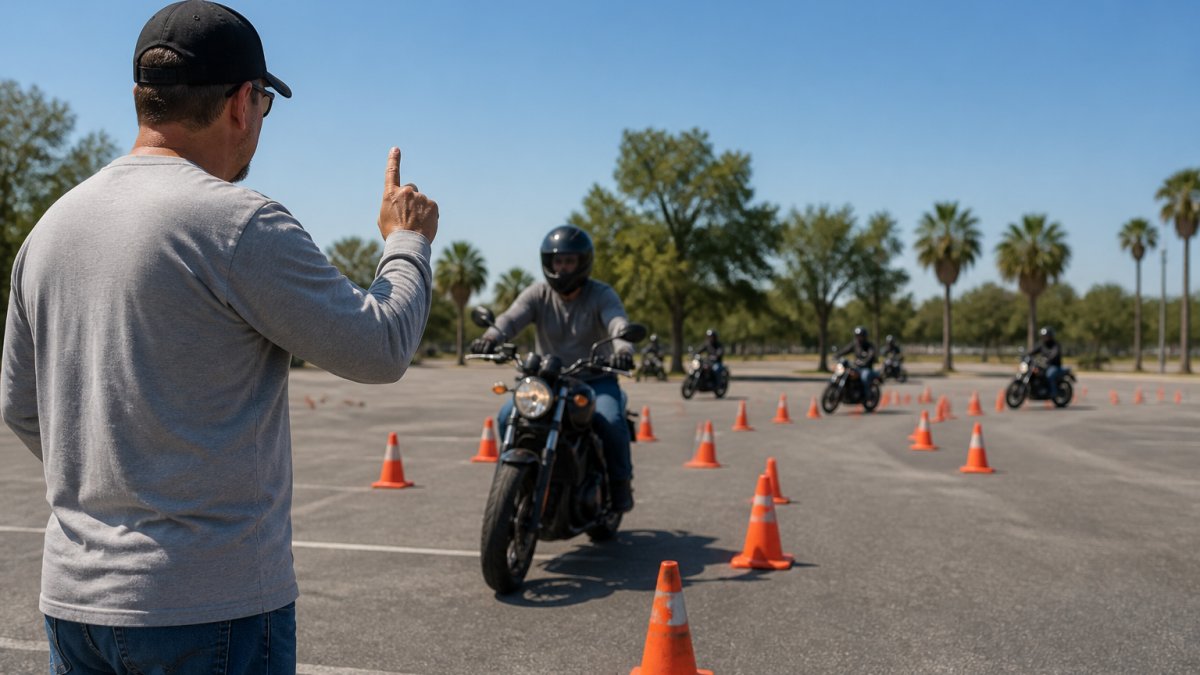
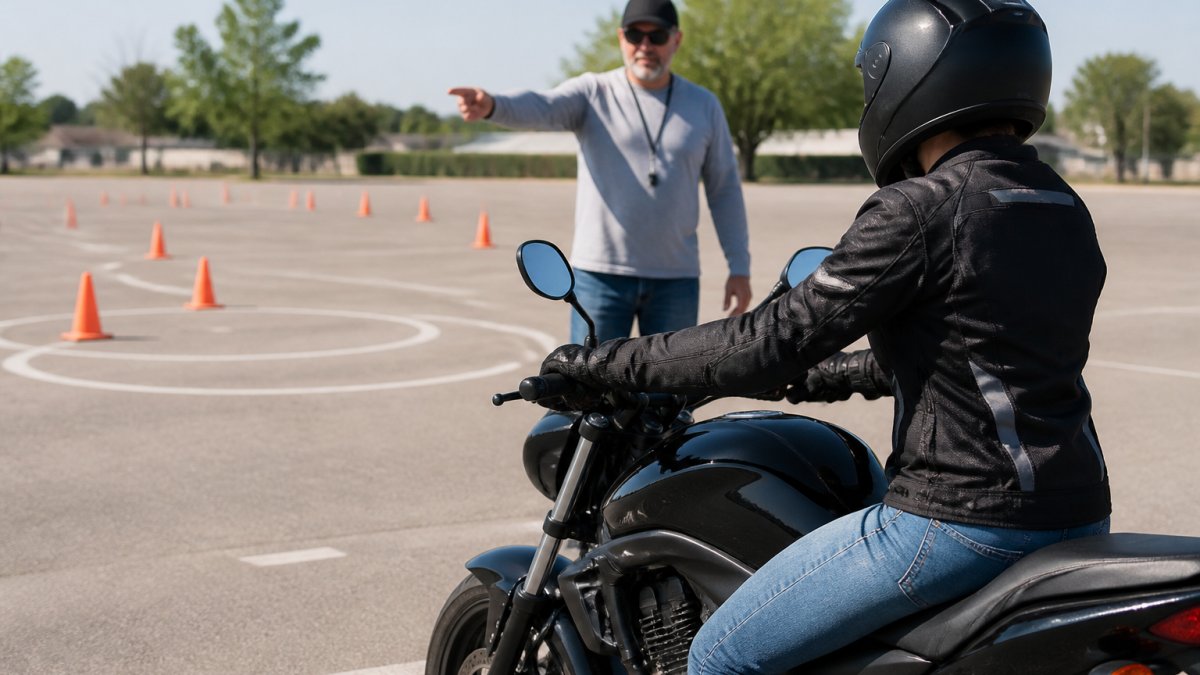
 how-to
Motorcycle Safety Course Benefits Explained
Table of Contents
- Why a Motorcycle Safety Course Is Worth Your Time
- Motorcycle Safety Course for Beginners: Building Skills From Zero
- Motorcycle Training for Experienced Riders: Why Returning Riders Benefit Too
- Motorcycle Safety Course Duration: What Two Days Actually Covers
- Motorcycle Safety Course Cost: What Affects What You Pay
- Licensing, Insurance, and Real-World Perks of Course Completion
- What Happens After the Course
- Frequently Asked Questions
Last Updated: October 13, 2026
Why a Motorcycle Safety Course Is Worth Your Time
A motorcycle safety course is a structured training program that combines classroom instruction with hands-on riding practice to teach you how to control a motorcycle and avoid crashes.
The safety course benefits go well beyond passing a test. Rider training builds the habits that keep you upright when traffic gets unpredictable.
Here is what most riders do not realize until they take a course:
- You learn crash prevention before you ever face real traffic
- You practice emergency braking in a controlled lot, not on I-275
- You build muscle memory for cornering and balance
The Motorcycle Safety Foundation sets the national standard for rider training, and its Basic Rider Course is recognized across the country.
Motorcycle Safety Course for Beginners: Building Skills From Zero
You do not need any riding experience to start. That is the entire point of a beginner course. Most students have never touched a clutch before their first class.
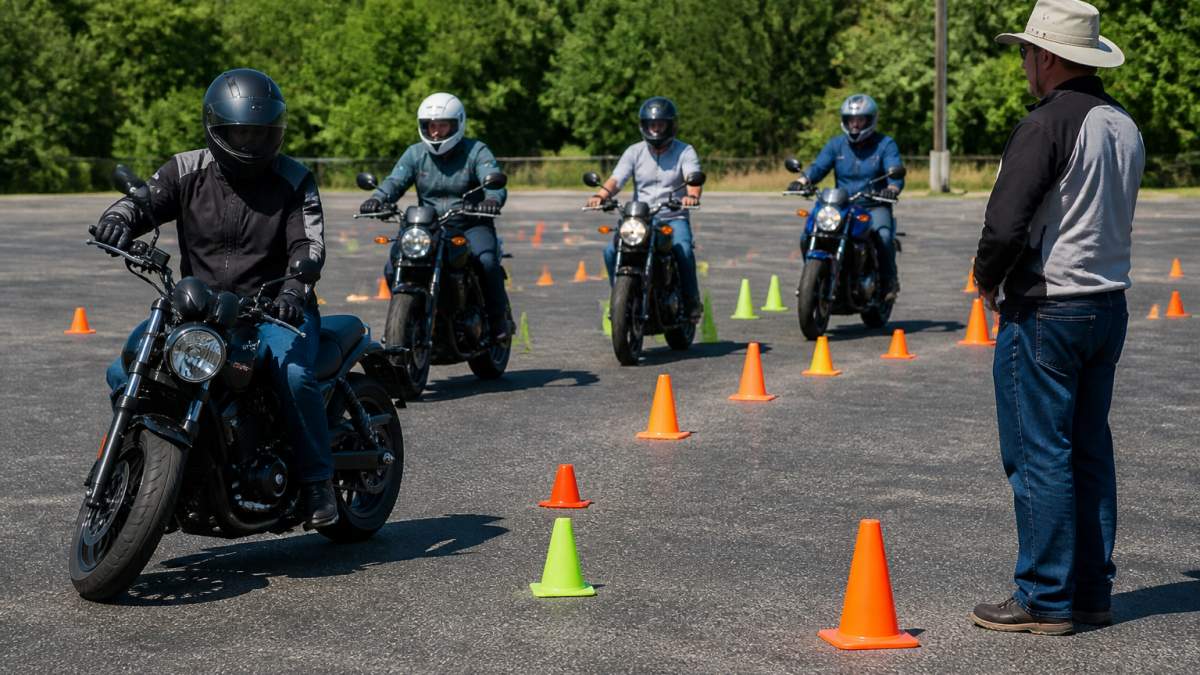
Basic Riding Skills You Practice on Day One
Day one focuses on control and balance at low speeds. You learn to find the friction zone, the point where the clutch starts to engage. From there, you practice:
- Starting and stopping smoothly
- Walking the bike under power
- Weaving through cones
A common mistake is gripping the bars too tight. New riders tense up, and that tension fights the bike. Instructors coach you to relax your grip and let your arms stay loose.
The training motorcycle is provided, so you do not need to own a bike to learn. That removes one of the biggest barriers for beginners.
Motorcycle Training for Experienced Riders: Why Returning Riders Benefit Too
Experience does not make you immune to bad habits. Riders who have been off a bike for years often carry skills that have quietly gone stale.
If you rode in your twenties and are getting back into it now, a refresher course is one of the smartest moves you can make.
Here is what returning riders tell us they gained:
- A safe place to shake off the rust before hitting the road
- Updated hazard awareness for today's traffic
- A clean path to the motorcycle endorsement if their old one lapsed
The course is not just for total beginners. Instructors adjust coaching to your level.
Motorcycle Safety Course Duration: What Two Days Actually Covers
The typical Basic Rider Course runs about two days, split between classroom instruction and on-cycle practice. The exact motorcycle safety course duration depends on the provider, but most programs combine several hours of classroom time with two full riding sessions.
Here is how the time usually breaks down:
| Segment | Focus | Format |
|---|---|---|
| eCourse | Road rules and risk awareness | Online, self-paced |
| Day 1 classroom | Traffic safety and strategy | In person |
| Day 1 range | Basic riding skills and control | On the bike |
| Day 2 classroom | Hazard awareness and decision-making | In person |
| Day 2 range | Braking, cornering, and the skills test | On the bike |
Two days sounds fast, but the structure is deliberate. Skills build on each other. By the end of day two, most students are riding with control and balance they did not have 48 hours earlier.
Motorcycle Safety Course Cost: What Affects What You Pay
Course pricing is one of the least transparent parts of rider training. Tuition varies widely by provider, region, and what the fee actually covers, but the variables that move the number are predictable once you know where to look.
The Main Cost Drivers
Four factors explain most of the spread in pricing:
- Whether a motorcycle is provided. Courses that supply a training bike carry higher overhead than ones that require you to bring your own. For a true beginner, a provided bike removes the chicken-and-egg problem of needing a motorcycle to learn to ride one.
- Class size and instructor ratio. A range with six students and one certified instructor delivers far more coaching per rider than a session with twenty students and two instructors. Smaller ratios cost more to run, and that shows up in tuition.
- Classroom format. A fully in-person course with a dedicated classroom component typically costs more than a blended program that pushes the knowledge portion online and reserves range time for riding.
What a Fee Usually Includes, and What It Doesn't
Before you compare two prices, line up what each one actually delivers. A typical course fee covers:
- Certified classroom and range instruction
- Use of a training motorcycle (on programs that provide one)
- The online knowledge portion, when the program uses a blended format
What frequently sits outside the fee:
- Personal protective gear, helmet, gloves, over-the-ankle footwear, eye protection, long sleeves and pants
- A motorcycle endorsement or permit fee paid to the licensing agency
- Optional advanced or refresher courses taken later
Ask the provider directly whether a helmet and gloves are loaned or whether you must bring your own. That single question can change your out-of-pocket total more than the tuition difference between two programs.
Register for the Basic Rider Course →
Financial Assistance and Discounts to Ask About
Tuition is not always the final number. Programs and state rider-training offices frequently offer ways to reduce it, and the only reliable way to know what applies to you is to ask before you register:
- Youth and new-rider discounts. Some state programs subsidize training for younger riders or first-time applicants.
- Military and veteran discounts. Active-duty service members and veterans are commonly eligible for reduced rates at both military-affiliated and civilian providers.
- Blended-learning savings. Completing the online knowledge portion before your range days sometimes lowers the in-person fee.
Call the provider and ask three questions before you pay: Is a motorcycle provided, what gear must I bring, and what discounts or subsidies do I qualify for? Those three answers tell you your real cost far better than the sticker price.
Do not pick a course on price alone. A cheap class with a large student-to-instructor ratio means less hands-on coaching and more time waiting your turn on the range. The value of a course is measured in repetitions and feedback, not in the tuition line.
Licensing, Insurance, and Real-World Perks of Course Completion
Course completion does more than teach you to ride. It can change how you get licensed and what you pay to insure the bike, but the specifics depend on your state's rules and your insurer's underwriting, so it pays to understand the mechanism rather than assume the benefit.
How Completion Connects to Your Endorsement
In many states, finishing an approved basic rider course lets you skip the riding skills test at the licensing office. The typical sequence works like this:
- You complete an approved course and receive a completion card.
- You take the written knowledge test at the licensing agency (some states waive this too, depending on the course).
- You present your completion card as proof of the riding portion.
- You pay the endorsement fee and receive your motorcycle endorsement.
The key word is approved. A program must be recognized by the state's rider-training authority, often through a national standard like the Motorcycle Safety Foundation curriculum, for the waiver to apply.
Eligibility conditions can also apply. Some states require you to be a certain age, hold a learner's permit first, or complete the course within a set window before applying for the endorsement.
The Insurance Discount: Real, but Conditional
Many insurers advertise a discount for riders who complete an approved safety course, and the discount is genuine, but it is rarely automatic and almost never uniform. What determines whether you get it and how much:
- The insurer's own underwriting rules. Each company decides whether to offer the discount, which courses qualify, and how large it is.
- Your state's insurance regulations. Discount availability and any mandated minimums vary by state.
- The course type. Basic and advanced courses may be treated differently.
The practical move is simple: after you complete the course, call your agent, tell them you finished an approved program, and ask specifically whether a safety-course discount applies to your policy. Do not assume it will be applied automatically. If your current insurer does not offer one, it is a fair question to raise when you next shop your coverage.
The Benefits That Don't Show Up on a Bill
The safety course benefits that show up on a bill are real, but the durable value is in the habits:
- Lower crash risk through practiced defensive riding. The skills you drill on the range, hazard scanning, emergency braking, controlled cornering, are the same ones that keep you out of trouble in traffic.
- Faster, more reliable reactions. Repeated braking and swerving practice builds muscle memory you cannot get from reading about it.
- A foundation for advanced training. A basic course is a starting point, not a finish line. Advanced and refresher courses build on it.
The licensing and insurance benefits are worth real money and real time, but they are conditional on your state's rules and your insurer's policies. Verify both before you enroll, and confirm the discount after you finish.
For the national picture on rider-training standards and approved curricula, the Motorcycle Safety Foundation is the place to start. To confirm how course completion connects to your endorsement and whether a skills-test waiver applies, check your state's licensing agency or rider-training office directly, since requirements and approved-provider lists change over time.
What Happens After the Course
You leave with a completion card, a set of skills, and a clear next step for your license. Most students take the written test within a few weeks and have their endorsement in hand shortly after.
The learning does not stop at the range. The best riders keep practicing. Find an empty lot and drill your quick stops. Ride in light traffic before you tackle rush hour.
If you want structured, MSF-certified training with small class sizes and patient instructors, Tampa Motorcycle Training runs the Basic Rider Course every weekend. You can register for the Basic Rider Course and be riding with confidence in two days.
Frequently Asked Questions
What are the benefits of taking a motorcycle safety course?
A motorcycle safety course builds basic riding skills, hazard awareness, and defensive riding habits in a controlled environment. You practice emergency braking, cornering, and quick stops with hands-on instruction. Many states waive the riding skills test for course graduates, and some insurers offer a discount after completion. Courses also build rider confidence before you ride in traffic, which reduces accident risk for new and returning riders alike.
Is a motorcycle safety course worth it for experienced riders?
Yes. Motorcycle training for experienced riders refreshes skills that fade over time, especially emergency braking and cornering technique. Riders returning after years away often find their reaction time and hazard awareness need sharpening. A structured course also corrects habits that developed without formal instruction. Many experienced riders take the course to bypass the DMV riding skills test or to qualify for an insurance discount.
How long does a motorcycle safety course take?
Most basic courses run two days, combining classroom instruction with on-range riding practice. The classroom portion covers road rules, traffic safety, and hazard awareness, while the range portion focuses on motorcycle handling, control and balance, and braking technique. Some providers split the course across a weekend or offer weekday sessions. Check with your training provider for exact schedules, since motorcycle safety course duration can vary by program.
Can a motorcycle safety course help you get a motorcycle endorsement?
In many states, completing an approved course lets you skip the DMV riding skills test and apply directly for your motorcycle endorsement. Course completion typically satisfies the skills portion of licensing requirements, though you may still need to pass a written knowledge exam. Requirements vary by state, so confirm the rules where you plan to ride. Training providers usually explain the endorsement process during registration.
Learning to ride safely is a skill, not a gamble. Tampa Motorcycle Training helps you build it with MSF-certified instruction, motorcycles provided for training, and class sizes capped at eight students so you get real attention. Our two-day Basic Rider Course gets you your Florida motorcycle endorsement and lets you skip the DMV riding skills test. Register now and start riding with confidence.