 how-to
How to Get a Motorcycle License in Florida: 2026 Steps
Table of Contents
- What You Need Before You Start the Florida Motorcycle License Process
- Basic RiderCourse Requirements: What the State-Approved Course Covers
- Step-by-Step: How to Get Your Motorcycle Endorsement in Florida
- The Motorcycle License Written Test: What to Expect
- Motorcycle Endorsement Cost and Where to Pay It
- Insurance, Out-of-State Transfers, and Other Practical Details
- Common Mistakes to Avoid When Getting Your Florida Motorcycle License
- Frequently Asked Questions
Last Updated: September 16, 2026
What You Need Before You Start the Florida Motorcycle License Process
Getting a motorcycle license Florida starts with one non-negotiable step: you must already hold a valid Class E operator license before the state will add a motorcycle endorsement to it. This guide from Tampa Motorcycle Training walks you through every requirement, fee, and test so you can plan the whole process in one sitting.
Florida does not issue a standalone motorcycle-only license to new riders. The state adds an endorsement to your existing driver license, which means you need to meet the standard requirements for a Class E license first: proof of identity, proof of residency, and a Social Security number. If you are under 18, you also need parental consent and a learner's license.
Here is what most guides get wrong: they treat the endorsement as a single test you show up and pass. In reality, Florida requires a state-approved safety course before you can even schedule the endorsement, and completing that course lets you skip the riding skills test at the driver license office entirely.
Before you book anything, gather these items:
- Your current Class E license or learner's license
- Proof of identity, such as a passport or birth certificate
- Two documents proving residency
- Your Social Security number
- Parental consent form if you are under 18
Florida Department of Highway Safety and Motor Vehicles licensing requirements confirms the endorsement is added to an existing license, not issued separately.
Basic RiderCourse Requirements: What the State-Approved Course Covers
The Basic RiderCourse is the Motorcycle Safety Foundation curriculum that Florida recognizes as its approved training path. You must complete it through an FRTP authorized sponsor before the state will process your endorsement.
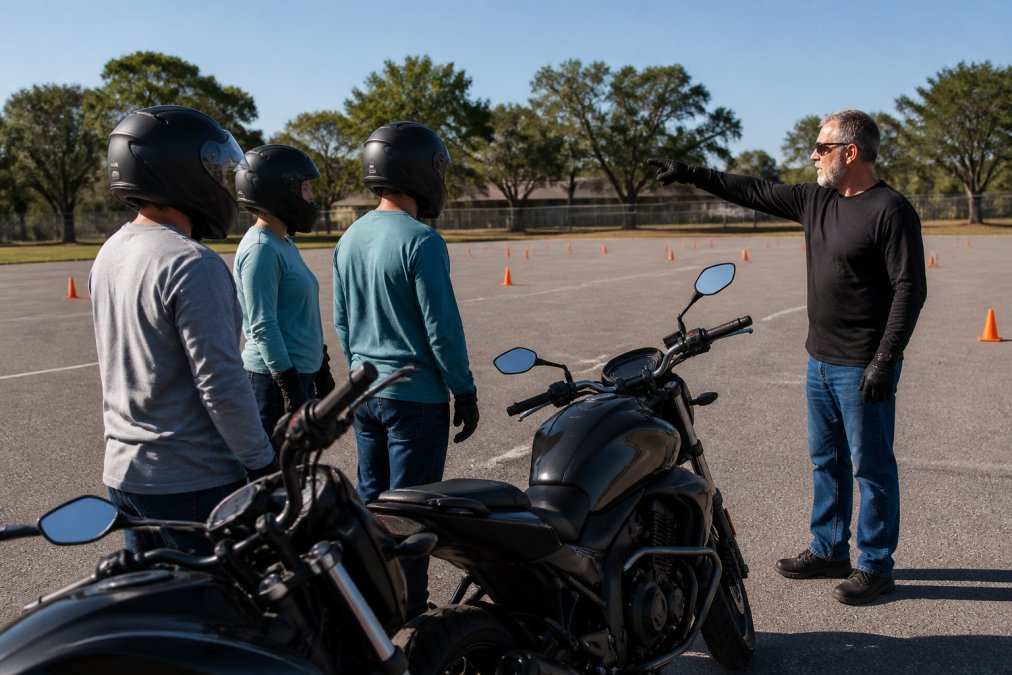
Classroom and On-Bike Instruction
The course splits into two parts. Classroom instruction covers traffic laws, motorcycle operation, risk awareness, and how to handle real road scenarios. The on-bike portion puts you on a training motorcycle to practice clutch control, slow-speed maneuvering, braking, and swerving.
Most students complete both portions over two days. You do not need prior motorcycle experience, and you do not need to bring your own bike.
Gear Requirements for the Safety Course
Florida's training providers require proper safety gear before you can ride on the range. Come prepared with:
- A DOT-approved helmet
- Eye protection
- Long sleeves and long pants
- Full-fingered gloves
- Over-the-ankle boots
Step-by-Step: How to Get Your Motorcycle Endorsement in Florida
The endorsement process is straightforward once you know the order of operations. Follow these steps in sequence:
- Confirm your Class E license is valid and not suspended
- Register for a Basic RiderCourse through an FRTP authorized sponsor
- Complete the classroom and on-bike instruction
- Pass the course's written and riding evaluations
- Bring your course completion card to a driver license office or tax collector
- Pay the endorsement fee and have the endorsement added to your license
The course completion card is the document that lets you bypass the state riding skills test. Without it, you must pass a practical skills test at a driver license office, which is the slower and more stressful path.
At Tampa Motorcycle Training, classes are capped at eight students, so instructors can give hands-on attention to every rider, including complete beginners and riders returning after years away.
The Motorcycle License Written Test: What to Expect
The written exam tests your knowledge of traffic laws, motorcycle operation, and safe riding practices. You take it as part of the Basic RiderCourse, and you must pass it before moving to the on-bike evaluation.
Questions cover lane positioning, braking technique, riding in traffic, and how alcohol and fatigue affect riding. Study the Florida Rider Training Program materials your provider issues, and review the state motorcycle operator manual.
If you fail the knowledge test, most providers let you retest after a review session. Ask about the retest policy before you enroll so you know exactly what happens if you miss the mark on your first attempt.
Motorcycle Endorsement Cost and Where to Pay It
Two separate costs hit your wallet on the path to a motorcycle endorsement: the training course and the state endorsement fee. Budget for both before you register for anything.
What the State Endorsement Fee Covers
The endorsement itself is a one-time addition to your existing Class E license. The fee is set by the state and collected when the endorsement is printed on your license. Because county tax collectors are allowed to add their own service charges on top of the state fee, the total you pay varies by county, sometimes by several dollars. The state fee schedule and your county's service charge are published by the Florida Department of Highway Safety and Motor Vehicles fee schedule, so pull the current numbers the week you plan to visit rather than relying on a blog post from last year.
Bring a debit card, credit card, or exact cash. Most tax collector offices accept cards, but a few smaller branches still run cash-only windows, and an ATM inside the lobby is not guaranteed.
What the Basic RiderCourse Costs
The course fee is separate from the state endorsement fee and is paid directly to your FRTP authorized sponsor. Course pricing varies by provider, location, and whether the sponsor supplies loaner helmets and gloves. Expect the course to be the larger of the two expenses. Ask your provider three questions before you pay:
- Does the fee include the use of a training motorcycle, or is there a separate rental charge?
- Is the written retest free if you fail the first attempt, or is there a per-retest fee?
- What is the cancellation and rescheduling policy if weather shuts down the range?
Tax Collector vs. DMV Locations
In most counties, you add the endorsement at the tax collector's office, the same office that handles vehicle registration and driver license renewals. A smaller number of counties operate a standalone driver license office through the Department of Highway Safety and Motor Vehicles. Some counties run both, and the two offices can have different appointment systems and different wait times.
A practical pattern most first-timers miss: tax collector branches in densely populated counties book out further than branches in neighboring rural counties.
What to Bring to the Office
Your course completion card is the single most important document.
Insurance, Out-of-State Transfers, and Other Practical Details
Most guides stop at the endorsement and leave you to figure out what happens the day after.
Insurance: The Cost Nobody Warns You About
- Engine size. A 250cc starter bike is priced very differently from a 1000cc sport bike. Insurers tier by displacement, and the jump between tiers can be steep.
- Rider history. A brand-new endorsement with no riding record reads as high risk to most carriers. Expect the first year to be the most expensive.
- Bundling. Riders who already carry auto insurance often get a multi-vehicle discount by adding the motorcycle to the same policy. Ask specifically for this, it is not always offered unless you request it.
Transferring an Out-of-State Motorcycle Endorsement
Bring these to the licensing office:
- Your current out-of-state license with the motorcycle endorsement visible
- Proof of identity and two proofs of residency
- Your Social Security number
- Your out-of-state driving record, if you can obtain one before the move (it speeds up verification)
Does an Out-of-State Safety Course Count?
This is the question that catches the most movers.
What Happens If You Ride Without the Endorsement
Common Mistakes to Avoid When Getting Your Florida Motorcycle License
The biggest mistake when getting your motorcycle license florida is assuming you can walk into a driver license office and take a riding test without training.
Frequently Asked Questions
How much does it cost in Florida to get your motorcycle license?
The motorcycle endorsement cost in Florida includes a state endorsement fee paid at a Tax Collector or driver license office, plus the cost of the Basic RiderCourse if you choose that path. The course fee varies by provider, and pricing depends on the training center, class dates, and what materials are included. Check with Tampa Motorcycle Training for current course pricing and a quote.
Can I ride a motorcycle with a regular license in Florida?
No. A standard Class E operator license does not allow you to ride a motorcycle on public roads. Florida requires a motorcycle endorsement, which appears on your license as a motorcycle-only designation or as an added endorsement on your existing Class E. Riding without the endorsement can lead to traffic convictions and fines.
Is the MSF course difficult to pass?
The Basic RiderCourse is designed for riders with no prior experience, so most students who attend both days and follow instructor feedback pass. The course combines classroom learning with on-bike instruction and a riding skills evaluation. Small class sizes and patient instructors make it easier to build confidence before the final skills test.
Do I need a motorcycle endorsement to ride a scooter in Florida?
It depends on the scooter's engine size. Scooters with engines 50cc or smaller can be ridden with a regular Class E license in most cases, but anything above 50cc requires a motorcycle endorsement. If you plan to ride a larger scooter, you will need to complete the same steps as getting a motorcycle license in Florida, including the written exam and skills test or an approved safety course.