 how-to
Motorcycle Safety Course for Adults: What to Expect
Table of Contents
- What Adults Learn in a Motorcycle Safety Course
- Motorcycle Endorsement Requirements and Licensing Benefits
- Motorcycle Course Duration: Classroom, Online, and Range Time
- Motorcycle Riding Gear for Beginners: What to Bring and Wear
- Motorcycle Safety Course Cost and Financial Assistance
- How to Choose the Right Motorcycle Safety Course for Adults
- What Happens If You Don't Pass or Need More Practice
- Frequently Asked Questions
Last Updated: October 12, 2026
What Adults Learn in a Motorcycle Safety Course
A motorcycle safety course for adults is a structured training program that combines classroom or online instruction with hands-on riding practice to prepare new riders for safe street operation. The core skills are the same whether you have never touched a bike or you are returning after 20 years away.
Most courses follow a progression. You start with the machine itself, then build up to the maneuvers that keep you alive in traffic.
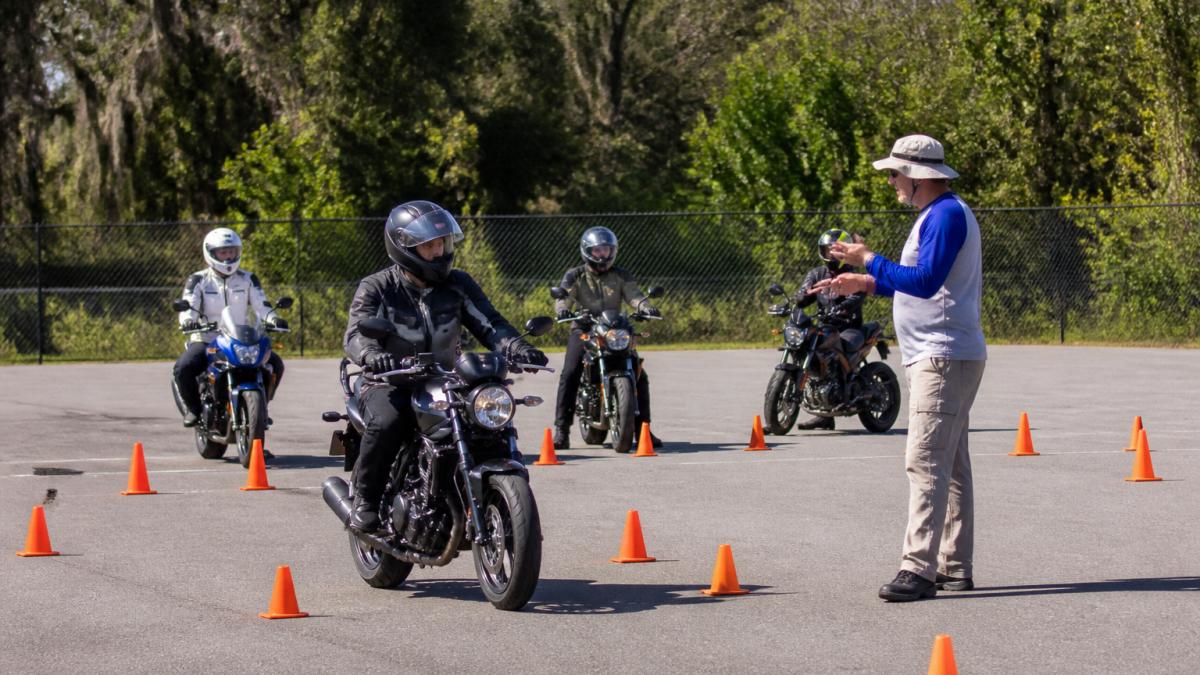
Motorcycle Controls and Straight-Line Riding
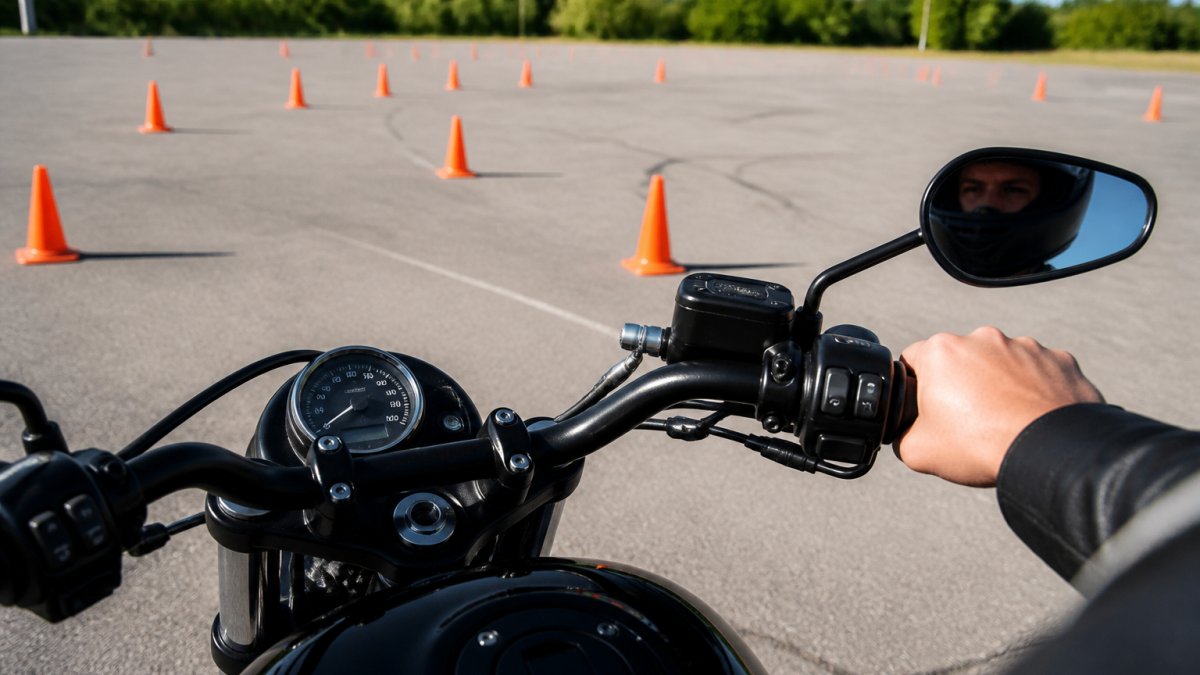
Before you ride, you learn where everything is: clutch, throttle, front and rear brakes, gear shifter, turn signals, and kill switch. Instructors walk you through each control on a stationary bike, then you practice finding them without looking down.
Straight-line riding comes next. You learn to feather the clutch, roll on the throttle smoothly, and keep the bike steady at low speed. This is where confidence starts.
Turning, Swerving, and Quick Stops
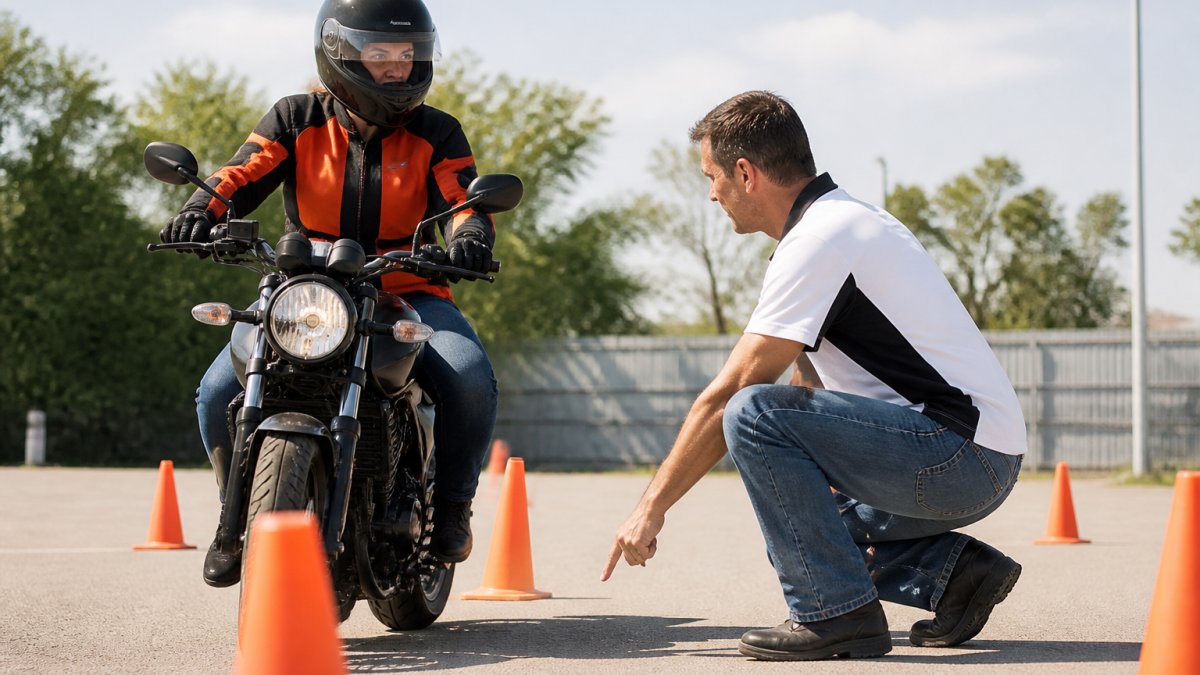
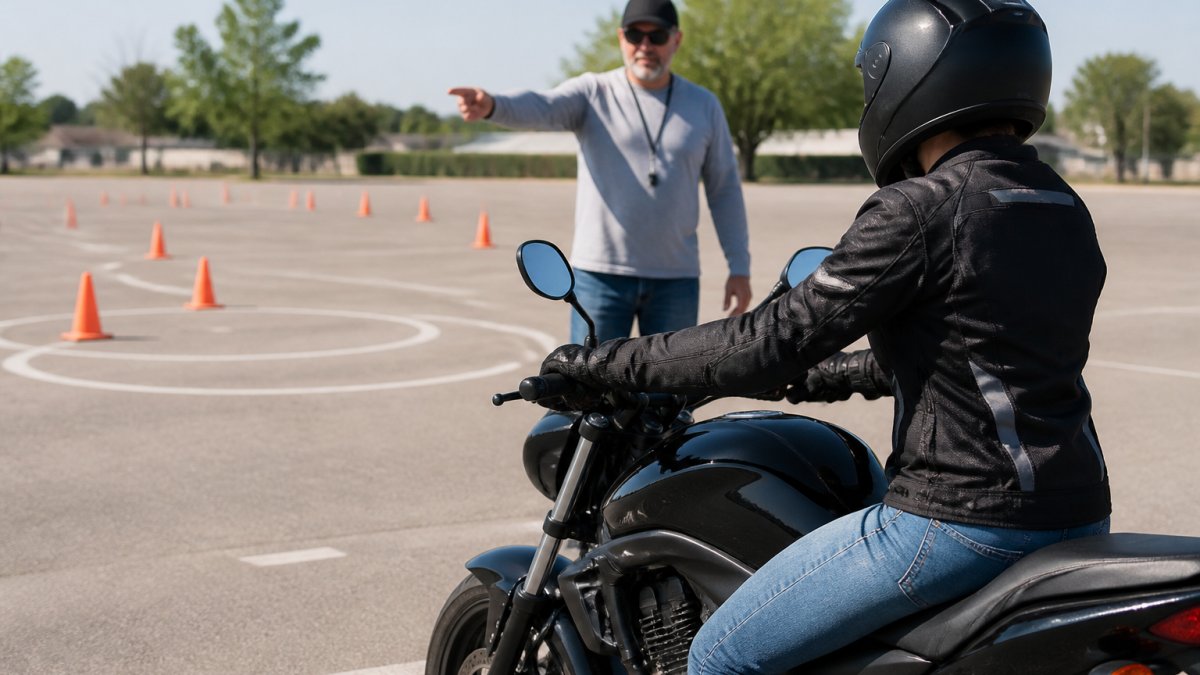
Cornering, swerving around obstacles, and emergency braking are the skills that prevent crashes. You practice turning within a marked path, swerving to avoid a hazard, and stopping quickly without locking the wheels.
Riding strategies round out the course: lane positioning, intersection awareness, and scanning for hazards. A common mistake is treating these as "advanced" topics. They are not. They are the foundation.
Motorcycle Endorsement Requirements and Licensing Benefits
A motorcycle endorsement is the legal authorization added to your driver's license that permits you to operate a motorcycle on public roads. Requirements vary by state, so confirm the specifics with your state's licensing agency before you enroll.
In many states, completing an approved rider training course waives the DMV riding skills test. That is a significant benefit: you demonstrate your skills on a closed range with an instructor rather than in traffic with an examiner.
The Motorcycle Safety Foundation rider training overview explains how recognized courses connect to licensing. Check your state's official licensing site for the exact steps, fees, and paperwork.
Motorcycle Course Duration: Classroom, Online, and Range Time
Course length depends on the level you enroll in, not just the provider. A basic beginner course, a returning-rider refresher, and an advanced skills course each run on different clocks, and knowing the difference helps you pick the right one and block the right amount of time off work.
Here is how the major course levels typically break down:
| Course level | Who it is for | Typical format | Typical total time |
|---|---|---|---|
| Basic beginner (entry-level) | Never ridden, or very little experience | Online or classroom + closed-range practice | About 15-20 hours across 2-3 days |
| Returning-rider refresher | Rode years ago, skills are rusty | Short classroom + range | About 5-8 hours, often 1 day |
| Intermediate / skills refresher | Currently licensed, wants sharper control | Range-heavy | About 5-6 hours, often 1 day |
| Advanced / experienced rider | Confident rider working on cornering, braking, evasive skills | Range only | About 5-8 hours, often 1 day |
Within a basic beginner course, the time usually splits like this:
| Component | Format | Typical time |
|---|---|---|
| eCourse or classroom | Online or in-person | About 5 hours |
| Range practice | Hands-on, closed course | About 10 hours |
| Skills assessment | Evaluated riding | 1-2 hours |
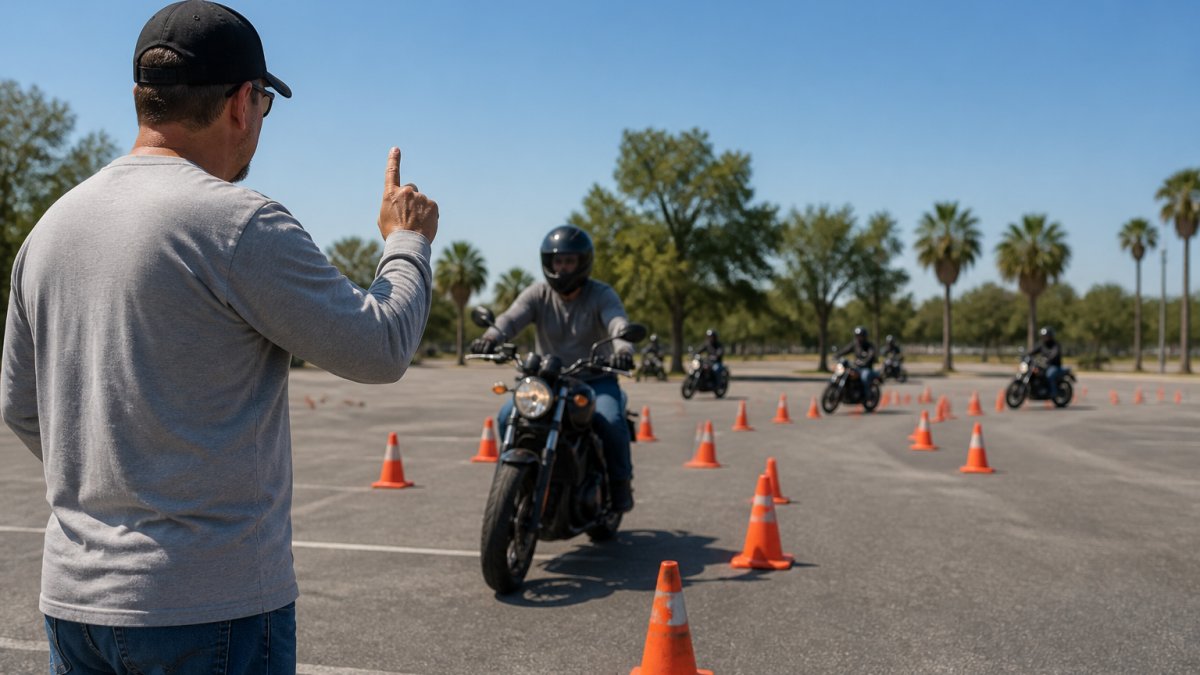
A few things drive the total up or down. Class size matters: a provider running eight students per instructor moves through each maneuver faster than one running twelve. Weather matters if the range is outdoors, since most providers pause for lightning or standing water. And the online portion is often self-paced, so a fast reader can finish the classroom requirement in an evening while a slower one spreads it across a week.
The two-day basic format feels fast, and it is. It works because every range hour is structured repetition, not free riding. You drill each maneuver until it is automatic, which is why the schedule is tight rather than leisurely. Mastering these foundational techniques provides the necessary confidence to eventually expand your riding horizons through diligent long distance travel preparation.
Before you register, ask the provider three scheduling questions: How many total range hours do I actually get on a bike? How many students share my instructor? Is the online portion self-paced or on a fixed clock? Those three answers tell you more about the real time commitment than the advertised number of days.
Motorcycle Riding Gear for Beginners: What to Bring and Wear
Proper gear is not optional. It is the difference between a minor scrape and a serious injury. Here is what you need for your first course:
- DOT-approved helmet (many courses provide one, but confirm)
- Eye protection if your helmet lacks a face shield
- Gloves that cover your full hand
- Long sleeves and long pants in sturdy material
- Over-the-ankle boots with a low heel
- Rain gear if you are riding outdoors
A common mistake is showing up in sneakers and shorts. Most courses will turn you away. Call ahead and ask what the provider supplies versus what you must bring.
Register for the Basic Rider Course →
The National Highway Traffic Safety Administration motorcycle safety guidance outlines helmet standards and rider safety fundamentals worth reviewing before your first class.
Motorcycle Safety Course Cost and Financial Assistance
Tuition is only part of the bill, and the total varies widely by state, provider, and course level. Rather than quote a single number that will not apply to you, here is how to estimate your real cost and where to look for help paying it.
What drives the tuition number
Four factors move the price the most:
- State subsidies. Some states fund rider training directly, which can push a basic course well below what an unsubsidized provider charges. Others leave it entirely to the market.
- Course level. A basic beginner course usually costs more than a one-day refresher or advanced skills course, because it includes more range hours and often a loaner motorcycle.
- What is included. A course that provides the motorcycle, helmet, and gloves is priced differently from one that expects you to bring your own.
- Provider type. Community-college and state-run programs often price lower than private training schools, though availability and waitlists differ.
Costs beyond tuition
Budget for these on top of the course fee:
- Gear you keep. A DOT-approved helmet, riding gloves, over-the-ankle boots, and sturdy long sleeves and pants are one-time purchases. Many providers loan a helmet for the range, but not all.
- Licensing fees. Adding a motorcycle endorsement to your license usually carries a separate state fee, and some states charge for the knowledge and skills tests if you take them at the licensing agency instead of through a course.
- Retake fees. If you do not pass the skills assessment, some providers include one retake and others charge for it. Ask before you enroll.
- Travel and time off. A two-day course can mean a night in a hotel or two days of lost wages if you are not salaried.
Where to look for financial assistance
A few common sources are worth checking:
- State rider-training programs. Many licensing agencies publish a list of approved providers and note which courses receive state funding or reduced fees. Start there.
- Age-based discounts. Some states and providers reduce fees for younger riders, and a few offer senior or veteran rates. Ask directly.
- Employer and military reimbursement. Some employers reimburse safety-training costs, and military tuition-assistance or morale programs sometimes cover rider courses. Check with your benefits office or unit.
- Provider payment plans. Smaller schools sometimes split tuition across two payments. It never hurts to ask.
National Highway Traffic Safety Administration motorcycle safety guidance is a useful starting point for helmet standards and rider safety fundamentals, and your state licensing agency's website is the authoritative source for current fees and approved providers.
How to Choose the Right Motorcycle Safety Course for Adults
Choosing well comes down to three factors: your experience level, your goals, and what is available near you. A complete beginner needs a basic rider course. A returning rider may want a refresher or an intermediate option.
Ask these questions before you register:
- Is the provider recognized by a national safety organization?
- How many students per instructor?
- Are motorcycles and helmets provided?
- Does completion waive the state skills test?
- What is the refund or retake policy?
For most adults in the Tampa Bay area, a course capped at eight students with certified instructors is highly beneficial. Smaller classes often mean more individual coaching time, which can be particularly helpful for nervous beginners.
Florida Department of Highway Safety and Motor Vehicles rider training information lists approved providers and licensing details for our state.
What Happens If You Don't Pass or Need More Practice
Not passing the first time is more common than people admit. The skills assessment is pass-or-fail, and nerves alone can trip up an otherwise capable rider.
Most providers offer a retake option, sometimes at a reduced fee or included in your original tuition. Ask about this policy before you enroll. A good course builds in a second chance rather than charging you full price again.
If you need more range time, some providers offer additional practice sessions. That extra hour or two often makes the difference.
Frequently Asked Questions
How much do motorcycle safety courses cost?
Costs vary by provider, location, and whether the course includes motorcycle rental and the MSF eCourse. Some providers offer age-based pricing or financial assistance. Tuition typically covers classroom materials, range practice, and the use of a training motorcycle. Contact Tampa Motorcycle Training directly for current pricing and any available discounts or payment options.
How long does a motorcycle safety course take?
Most MSF-certified Basic Rider Courses run two days, combining a five-hour online eCourse with about ten hours of hands-on riding practice. Some providers split the range sessions across a weekend. The total time commitment is usually 15 to 20 hours, including classroom or online learning and skills assessment.
What gear do you need for a motorcycle safety course?
You will need a DOT-approved helmet, eye protection, long sleeves, long pants, full-finger gloves, and over-the-ankle boots. Some providers loan helmets and gloves, but it is best to confirm in advance. Avoid loose clothing that can catch on controls, and bring rain gear if the forecast calls for it.
Can an adult with no riding experience take a motorcycle safety course?
Yes. Beginner courses are designed for adults with no prior riding experience. Instructors start with motorcycle controls, starting and stopping, and straight-line riding before moving to turning, swerving, and quick stops. Small class sizes, like the eight-student cap at Tampa Motorcycle Training, give you personalized attention throughout.