 how-to
Motorcycle License Course for Beginners: What to Expect
Table of Contents
- What a Motorcycle License Course for Beginners Actually Covers
- How the MSF-certified Basic RiderCourse Gets You Street Legal
- Motorcycle Training Course Duration: What Two Days Really Looks Like
- How the Motorcycle License Test Waiver Saves You a Trip to the DMV
- Beginner Motorcycle Riding Gear Requirements: What to Wear on Day One
- Physical Fitness, Height, and Bike Fit: What Beginners Should Know
- After the Course: Building Confidence and Insurance Considerations
- Common Mistakes Beginners Make (and How to Avoid Them)
- Frequently Asked Questions
Last Updated: October 2, 2026
What a Motorcycle License Course for Beginners Actually Covers
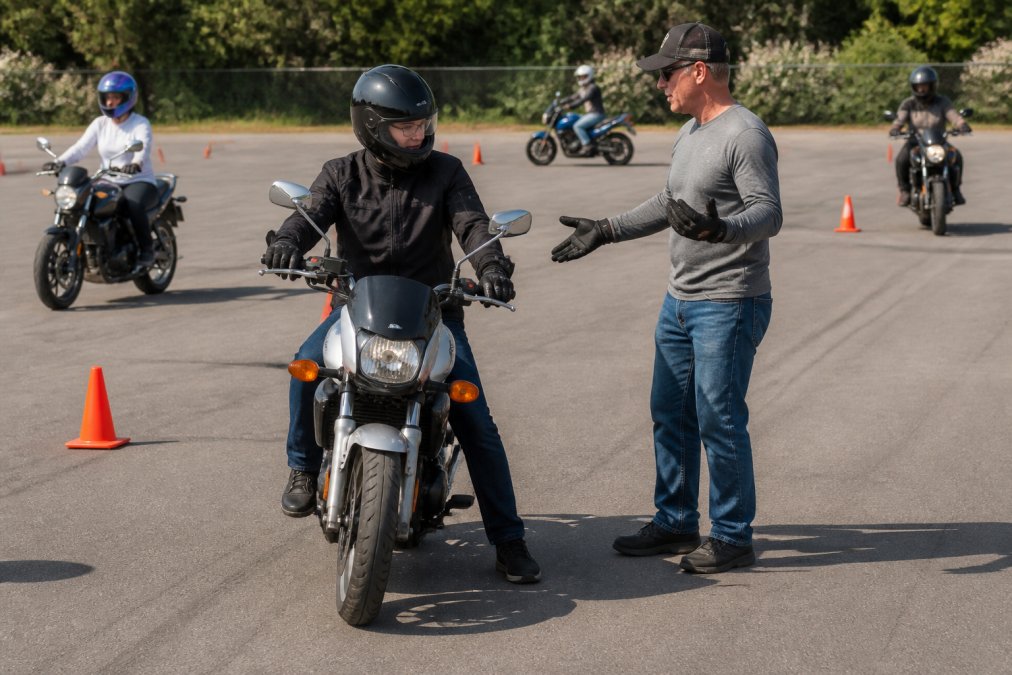
A motorcycle license course for beginners is a structured training program that combines classroom instruction with hands-on riding practice to prepare new riders for safe street operation. At Tampa Motorcycle Training, our MSF-certified Basic Rider Course covers both parts in two days, and no prior riding experience is required.
Classroom and eCourse Topics
The classroom portion builds the mental framework you'll rely on every time you ride. According to the Motorcycle Safety Foundation's rider education overview, core topics include risk awareness, defensive riding strategies, and the physics of how a motorcycle behaves in traffic.
You'll cover:
- Crash avoidance and risk management
- Lane positioning and visibility
- Alcohol, fatigue, and impairment effects
- State licensing rules and endorsement requirements
On-Bike Riding Exercises
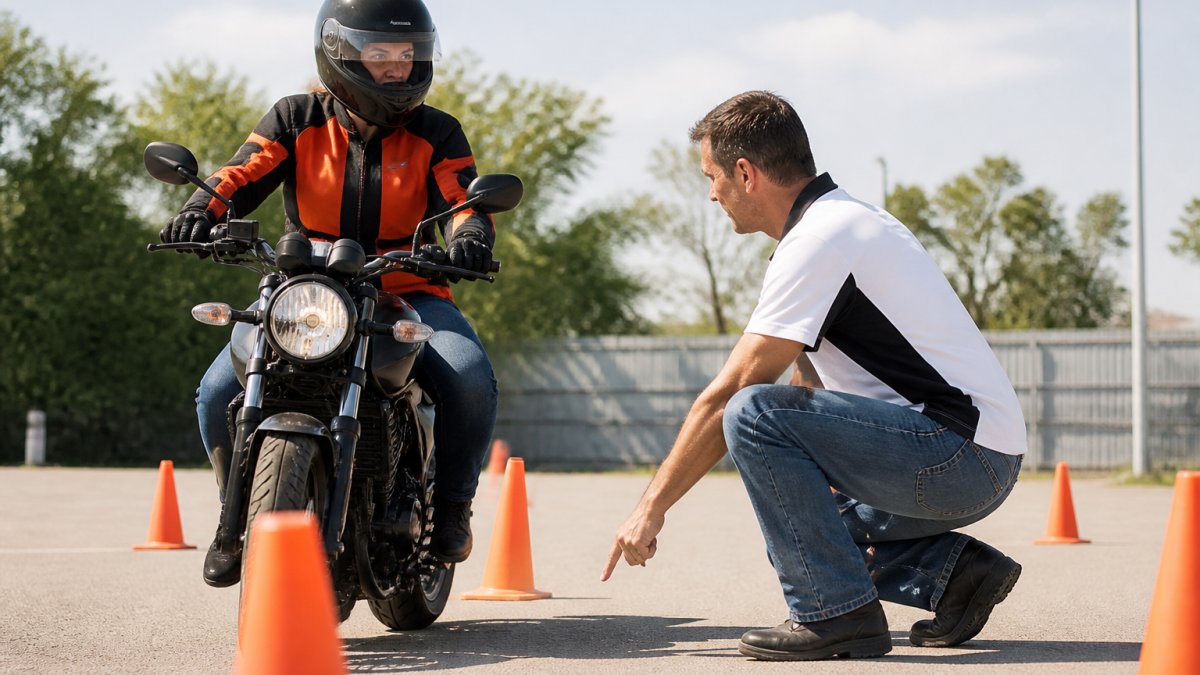
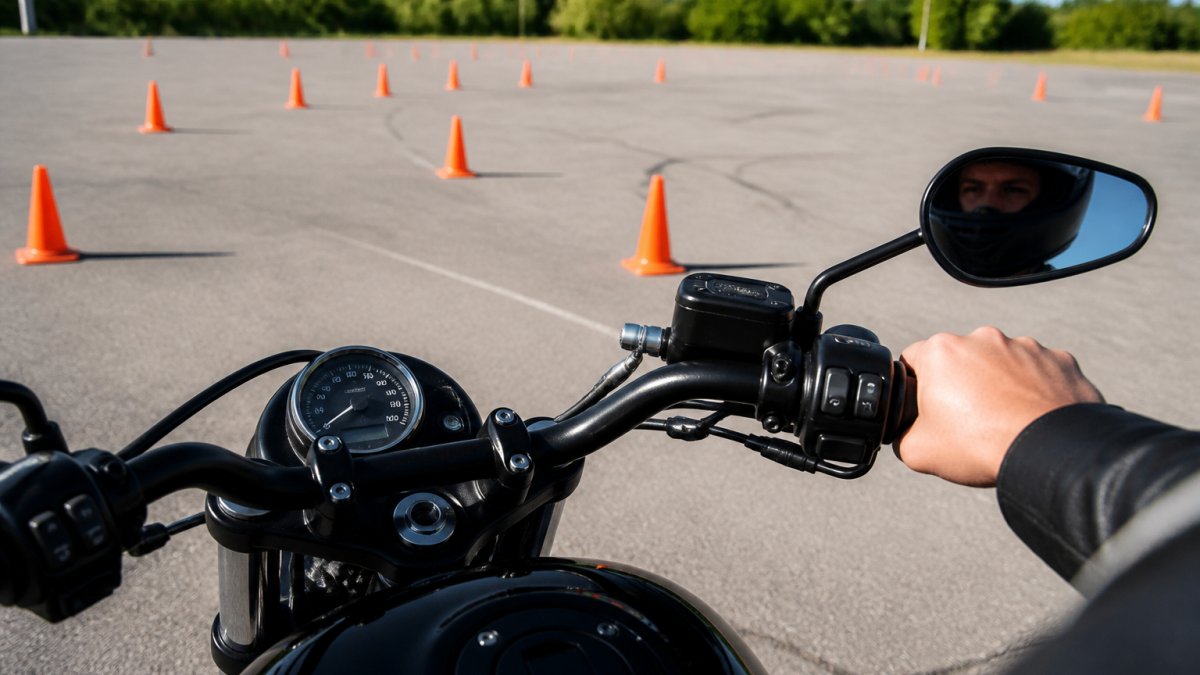
Range exercises start with the basics and build steadily. Students learn motorcycle controls, throttle control, and the clutch friction zone before ever leaving first gear.
How the MSF-certified Basic RiderCourse Gets You Street Legal
The MSF-certified Basic RiderCourse is the most widely recognized path to a motorcycle endorsement in the United States. Completing it satisfies the riding portion of your licensing requirement, so you walk away with a course completion card instead of a test appointment.
What to Bring and What's Provided
You bring a few personal items; the training site handles the rest.
| Item | You Bring | Provided |
|---|---|---|
| Motorcycle | No | Yes |
| Helmet | Recommended | Yes |
| Gloves | Yes | No |
| Eye protection | Yes | No |
| Over-the-ankle boots | Yes | No |
| Long sleeves and pants | Yes | No |
Motorcycle Training Course Duration: What Two Days Really Looks Like
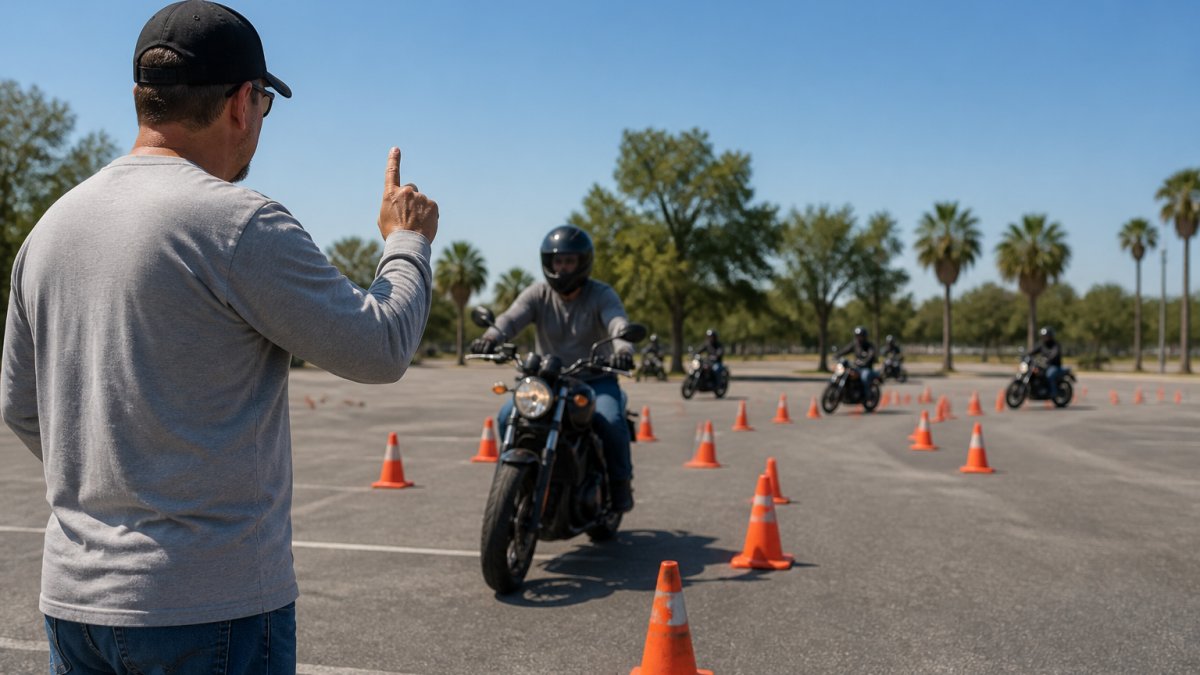
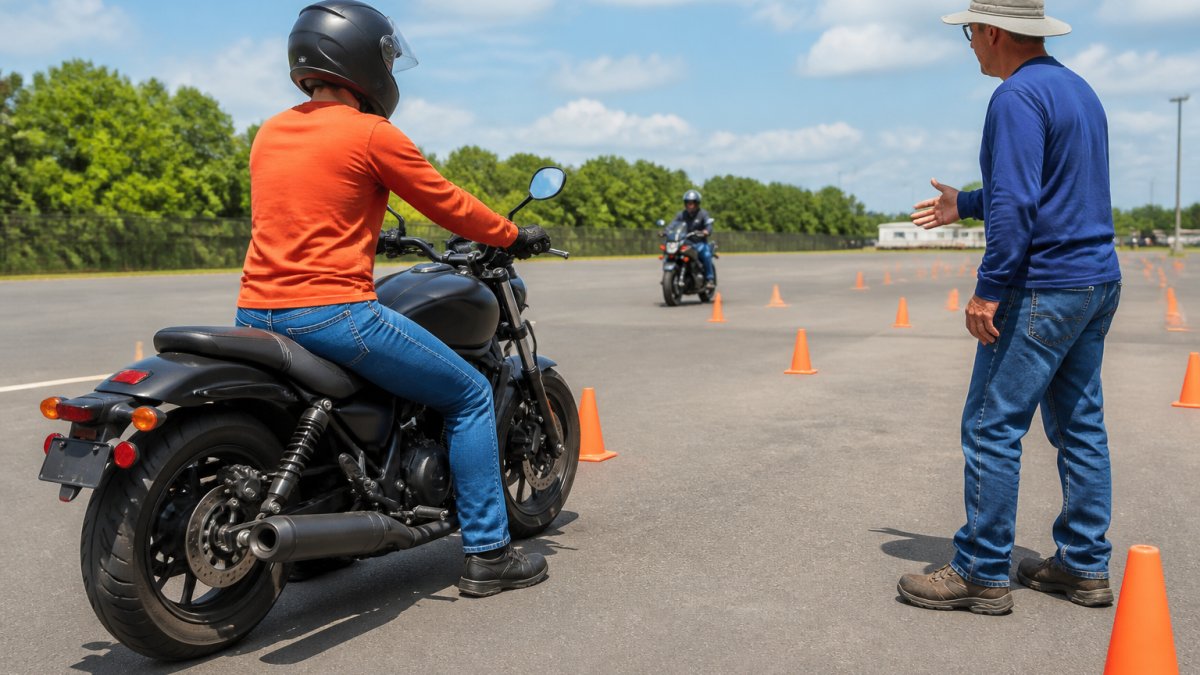
A typical motorcycle training course duration spans two days, usually a full weekend. Each day mixes classroom time with several hours on the range, and you'll ride in small groups with plenty of repetition.
Is Two Days Enough to Go From Zero to Test-Ready?
Two days is enough for most complete beginners, provided you come ready to focus. The course is designed around the assumption that you've never touched a motorcycle.
What Actually Determines Whether You Pass
Most beginners assume the course is a formality. It isn't, there's a real evaluation at the end. The riders who pass comfortably tend to share a few traits:
- They arrive physically rested. Fatigue on day two is the single biggest performance killer. Sleep matters more than extra practice.
- They've handled the bike's weight before. Even sitting on a stationary motorcycle and rocking it side to side for ten minutes before class reduces the surprise of a 300-400 lb training bike.
- They ask for clarification early. Instructors would rather repeat a drill than watch a student struggle silently for an hour.
- They treat the friction zone as a skill, not a step. Clutch control is the foundation every other exercise builds on.
Physical Readiness: The Part Most Guides Skip
You don't need to be an athlete, but a few physical realities affect how quickly you progress:
- Inseam and seat height. Training bikes vary. Shorter riders often do better on a lower seat; taller riders may feel cramped on a small frame. Ask what bikes the range uses before you register.
- Core and leg strength. Balancing a motorcycle at walking speed uses your lower body more than new riders expect.
- Grip strength. Clutch and brake control improve when your hands aren't fatiguing after the first hour.
- Heat tolerance. Range days happen outdoors. Hydrate the night before, not just during breaks.
What to Do in the Week Before Your Course
A little preparation goes a long way:
- Finish the eCourse completely, don't skim it.
- Read your state's rider handbook once, even if the course covers the same ground.
- Sit on a motorcycle if you can borrow one, just to feel the weight.
- Gather your gear early so day one isn't a scramble.
- Clear your calendar for both days, partial attendance usually means a retake.
How the Motorcycle License Test Waiver Saves You a Trip to the DMV
The motorcycle license test waiver is the biggest practical reason to take a formal course. When you complete an approved Basic RiderCourse, you typically skip the DMV riding skills test entirely and go straight to the licensing office to add your endorsement.
Register for the Basic Rider Course →
How the Waiver Actually Works at the Counter
The waiver isn't automatic, it's a document you carry. Here's the sequence most riders follow:
- Finish the course and pass the range evaluation. The instructor signs off on your skills.
- Receive your completion card. This is the physical proof the state accepts in place of a riding test.
- Bring the card to the licensing office along with your standard identification, proof of residency, and payment for the endorsement fee.
- Take the written knowledge exam if you haven't already. The waiver covers the riding portion only.
- Receive your endorsement, usually the same visit if your paperwork is in order.
What the Waiver Does Not Cover
- The written exam still applies. Study the state rider handbook before you go; the course covers much of the same material but the test is separate.
- The waiver is state-specific. A course approved in one state may not transfer if you move. Check reciprocity before you relocate.
- Your completion card has an expiration. Most states honor it for a limited window, so don't sit on it for a year.
- You still need a valid driver's license or instruction permit as the base credential.
The written exam still applies at the DMV, but the part most beginners dread, the riding assessment, is already behind you.
Beginner Motorcycle Riding Gear Requirements: What to Wear on Day One
Beginner motorcycle riding gear requirements are simple: protect your head, hands, eyes, and skin. Every course requires a DOT-approved helmet, and most ask for over-the-ankle boots, full-finger gloves, long pants, and a long-sleeved jacket. Proper equipment extends beyond your personal safety gear to include the health of your machine, making powersports battery maintenance a vital habit for ensuring your motorcycle is ready to ride whenever you are.
- Helmet: DOT-approved, properly fitted
- Eye protection: glasses or a face shield
- Gloves: full-finger, leather or abrasion-resistant
- Boots: over-the-ankle, non-slip sole
- Clothing: long sleeves, long pants, no exposed skin
Physical Fitness, Height, and Bike Fit: What Beginners Should Know
You don't need to be an athlete to pass a beginner course, but basic fitness and bike fit matter more than most guides admit. You'll be balancing a motorcycle at low speeds, which uses your core and legs more than new riders expect.
- Balance and core strength help with slow-speed maneuvering
- Leg strength matters for holding a bike upright at stops
- Inseam and reach determine which bike fits you comfortably
- Grip strength helps with clutch and brake control
After the Course: Building Confidence and Insurance Considerations
Passing the course is the start, not the finish. New riders build confidence through consistent, low-pressure practice, empty parking lots, quiet residential streets, and short rides in good weather before tackling highways.
Insurance Information Institute guidance on motorcycle coverage
A few habits speed up your progression:
- Ride the same familiar route until it feels automatic
- Practice emergency braking in a lot before you need it in traffic
- Add one new challenge per week, not five
- Avoid rush-hour traffic until your low-speed control is solid
Common Mistakes Beginners Make (and How to Avoid Them)
| Mistake | Fix | Why It Matters |
|---|---|---|
| Death-gripping the bars | Relax your grip, use your core | Tension kills smooth steering |
| Staring at the front wheel | Look where you want to go | You steer toward your focus |
| Skipping the eCourse | Finish it before day one | Range time is for riding |
| Buying gear after the course | Bring proper gear on day one | You can't ride without it |
| Rushing to highways | Practice in low-traffic areas first | Confidence builds in stages |
Tampa Motorcycle Training has helped Tampa Bay riders earn their endorsement with patient, certified instructors and small classes. Our 4.9 rating across 688+ Google reviews reflects what students tell us most: the instructors care whether you actually learn to ride.
Frequently Asked Questions
How much is a motorcycle license course in Florida?
Pricing varies by provider, class size, and whether training motorcycles and helmets are included. Tampa Motorcycle Training keeps classes capped at eight students so every rider gets hands-on coaching, which affects cost compared with larger, less personal courses. Rather than quote a number that may change, check the current tuition and available dates on the registration page before you book, and ask what the fee covers: eCourse access, loaner bikes, helmets, and range time.
Do I need a motorcycle permit before taking a license course?
In most cases you do not need a permit to enroll in the MSF-certified Basic RiderCourse. Beginners can complete classroom and on-bike instruction first, then use their course completion card to apply for the Florida motorcycle endorsement. Some riders choose to get a learner permit beforehand for extra practice time, but it is not a prerequisite for the course itself. Confirm your specific situation when you register.
Does a motorcycle license course waive the DMV riding test?
Yes, completing an approved Basic RiderCourse typically waives the DMV riding skills test. You still need to handle the written exam and licensing paperwork at the DMV, but the practical riding evaluation is covered by your course completion. This is one of the main reasons beginners choose a structured motorcycle license course over self-study: you build skills under supervision and skip the stress of testing on an unfamiliar bike at the DMV.
What happens if I fail the motorcycle safety course?
Many providers build in a second chance or offer a discounted retake, since nerves and weather can affect even prepared riders. Before you enroll, ask what the policy is: can you return for additional range time, and is there a fee? Tampa Motorcycle Training's small class sizes mean instructors can spot struggling riders early and give extra coaching during the two days, which reduces the odds you finish unprepared.