 how-to
Motorcycle Training for Nervous Beginners: A 2026 Guide
Table of Contents
- Why Nervous Beginners Are the Norm, Not the Exception
- What to Expect in the MSF Basic RiderCourse
- How to Overcome Motorcycle Riding Anxiety Before Day One
- What to Wear to Motorcycle Safety Class
- Physical Fitness for Motorcycle Handling
- Motorcycle Training for Nervous Beginners: Two Days, Zero to Endorsement
- After the Course: Beating the Post-Course Confidence Slump
- Frequently Asked Questions
Last Updated: September 28, 2026
Why Nervous Beginners Are the Norm, Not the Exception
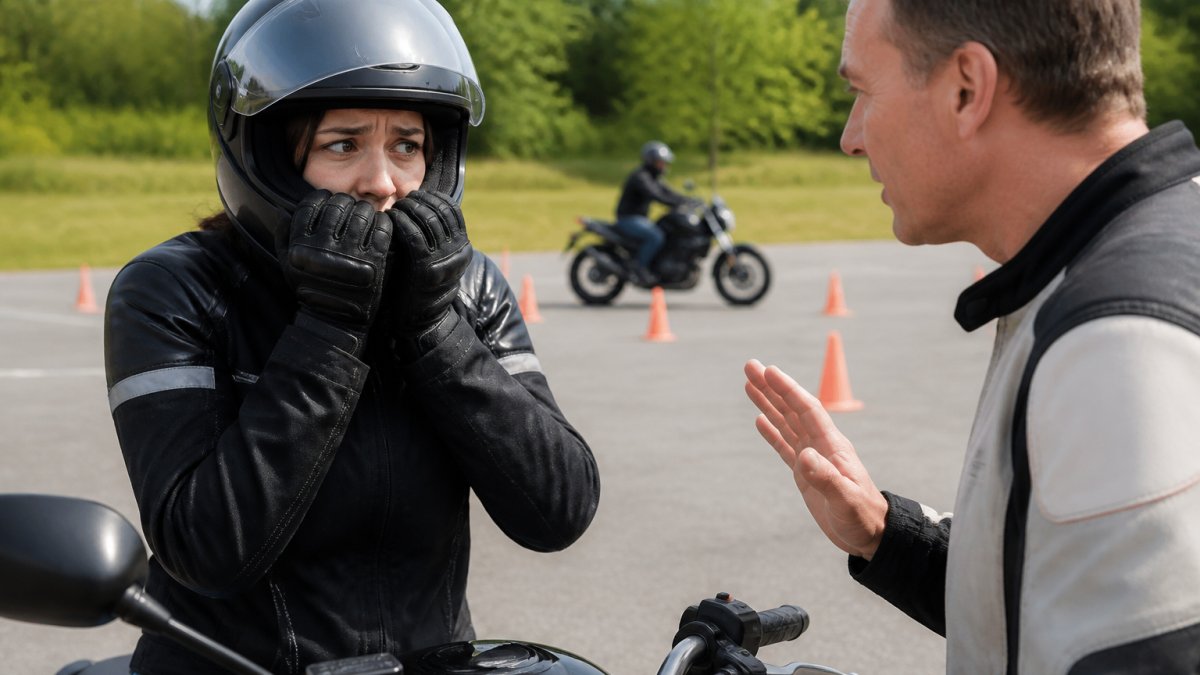
If your stomach drops at the thought of balancing a 400-pound machine on two wheels, you are not the odd one out. Nervous beginners make up a huge share of every basic rider course, and motorcycle training for nervous beginners is built around that reality, not despite it. At Tampa Motorcycle Training, we see first-timers every week who have never touched a clutch, and they still earn their Florida motorcycle endorsement in two days. The fear is normal.
What to Expect in the MSF Basic RiderCourse
The MSF Basic RiderCourse is the standard entry point for new riders: roughly 15 hours split between classroom work and hands-on range time, ending with a skills evaluation. Most students complete it over one weekend. You'll start on a small training motorcycle with the engine off, learning where everything is before you ever move.
Classroom vs. Range: How the Two Days Break Down
Day one leans on the classroom and the MSF eCourse, covering risk mitigation, situational awareness, and the rules that govern a motorcycle endorsement. Then you move to the range for your first time on a bike.
Clutch Control, Throttle Management, and the Friction Zone
The friction zone is the point in the clutch lever's travel where the engine starts to pull the bike forward. Finding it is the single most important skill for a nervous beginner. Too much clutch and you stall. Too little and you lurch.
How to Overcome Motorcycle Riding Anxiety Before Day One
The best way to overcome motorcycle riding anxiety is preparation, not pep talks. Anxiety shrinks when the unknown becomes familiar. But familiarity alone isn't enough, nervous beginners also need a way to handle the physical surge of adrenaline that hits the moment they straddle the bike. That's where a few evidence-informed coping techniques come in.
The Physiological Sigh: Your Fastest Reset
When anxiety spikes, your breathing goes shallow and fast, which feeds the feeling of panic. A slow exhale longer than your inhale reverses that loop. Try what researchers call the physiological sigh: two quick inhales through the nose, then one long, slow exhale through the mouth. Two or three rounds drops your heart rate noticeably.
Box Breathing for the Staging Line
Box breathing is simple and easy to do with a helmet on: inhale for a count of four, hold for four, exhale for four, hold for four. Repeat for a minute. It gives your mind a task, which is the point, anxious minds calm down when they're occupied with something concrete. Practice it at home a few times before class so it's automatic when you need it.
Visualization: Rehearse the Range Before You Ride It
Visualization works because your brain treats a vividly imagined scene much like a real one. Sit somewhere quiet and walk yourself through the range in first person: you feel the seat under you, you squeeze the clutch, you hear the engine note change as you find the friction zone, you creep forward and stop.
Reframe the Goal: One Drill at a Time
You are not trying to be a great rider on day one. You are trying to complete one drill at a time. Break the weekend into small wins: start the bike, find the friction zone, complete a lap. When a mistake happens, and it will, treat it as data. Dropping the bike at low speed in a controlled environment is a learning moment, not a disaster.
Practical Prep That Lowers the Stakes
- Watch videos of the range exercises so the cones and drills look familiar
- Visit the training site beforehand to see where you'll ride
- Sit on a motorcycle (engine off) and get used to the weight and controls
- Sleep, eat, and hydrate before class, fatigue amplifies fear
- Tell your instructor you're nervous. Good ones adjust their pacing and check in more often
What to Wear to Motorcycle Safety Class
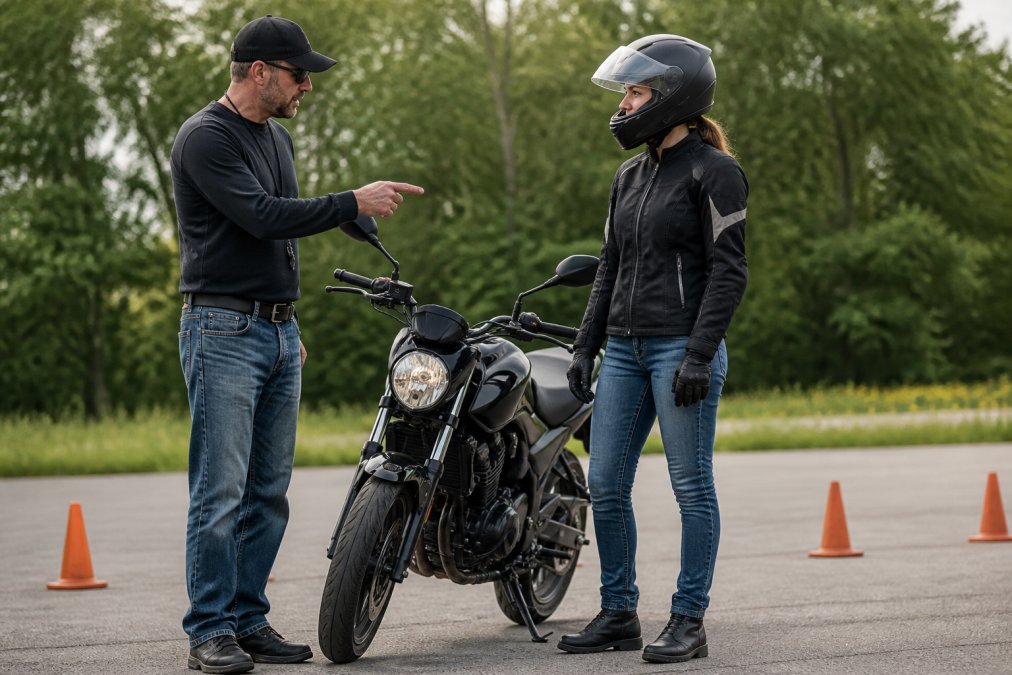
Dress for a real ride, because you'll be doing one. Most courses require over-the-ankle boots, long pants, a long-sleeved shirt or jacket, full-finger gloves, and eye protection. A DOT-approved helmet is typically required, and many courses provide loaners if you don't own one yet.
Helmet Safety and Riding Gear Essentials
Helmet safety starts with fit. A helmet should sit level, snug, and not shift when you shake your head. Look for a DOT certification label inside. Beyond the helmet, riding gear essentials include:
Register for the Basic Rider Course →
- Armored jacket or thick long sleeves for abrasion protection
- Full-finger gloves with a secure wrist closure
- Over-the-ankle boots with a low heel
- Impact-resistant eye protection
Physical Fitness for Motorcycle Handling
Motorcycle handling is more physical than new riders expect. You'll hold a bike upright at low speeds, work the clutch and brake repeatedly, and stay balanced for hours in the sun. You don't need to be an athlete, but basic fitness helps.
Motorcycle Training for Nervous Beginners: Two Days, Zero to Endorsement
Two days is realistic because the course is designed around a proven sequence, not a race. You build skills in order: controls, friction zone, low-speed maneuvers, then braking and defensive riding. Completing an approved Basic RiderCourse typically waives the DMV riding skills test, so you leave with the paperwork to claim your endorsement.
| Course Component | What Happens | Why It Helps Nervous Riders |
|---|---|---|
| Classroom / eCourse | Rules, risk, awareness | Removes the unknown |
| Range day one | Controls, friction zone | Builds slow, safe reps |
| Range day two | Maneuvers, braking, stops | Turns skills automatic |
| Skills evaluation | Final riding test | Earns endorsement, skips DMV test |
After the Course: Beating the Post-Course Confidence Slump
The confidence slump is real and almost nobody warns you about it. You pass the course, feel great, then ride on real roads for the first time and everything feels faster and scarier than the range. This is normal. The range is a controlled environment; traffic is not. What most guides skip is that the slump has a predictable shape, and a predictable fix.
Why the Slump Happens
On the range, every variable is controlled. You know the surface, the cones, the instructor's signals, and the fact that no one is going to turn left in front of you. Public roads strip all of that away at once. Your brain, which just spent two days building a tight loop of "see cue → do action," suddenly has to process traffic, signs, pedestrians, and weather on top of the riding itself.
A Four-Week Practice Ladder
The fix is deliberate, graduated exposure, not one big ride that scares you off the bike. Think of it as a ladder, one rung at a time:
- Week 1, Parking lots and empty streets. Ten to fifteen minutes at a time, twice a week. Practice the friction zone, slow-speed figure-eights, and emergency stops. You are rebuilding the range in a new place.
- Week 2, Quiet residential streets. Low-traffic times only (early Sunday mornings are ideal). Focus on smooth starts, stops, and lane positioning. No highways, no rush hour.
- Week 3, Arterial roads with moderate traffic. Add one new variable at a time: a left turn at a signal, a lane change, a merge. Talk yourself through each one before you do it.
- Week 4, Short highway or higher-speed stretches. Keep them brief. The goal is exposure, not endurance.
The Skills That Decay First
Friction-zone control and emergency braking are the two skills that fade fastest when you don't ride. If weeks pass between sessions, spend the first ten minutes of every ride re-drilling them in a parking lot before you head out. It sounds tedious. It is also the single fastest way to feel competent again.
When to Take a Refresher
If more than a month has passed since your last ride, or if you've had a close call that rattled you, a refresher session with an instructor is worth it. Many training programs offer short one-on-one range sessions specifically for returning riders. You are not starting over, you are re-calibrating.
Find a Riding Buddy
Riding alone as a new rider amplifies every worry because there's no one to model good behavior. A more experienced rider who is willing to go at your pace, not theirs, is worth more than any video course. Be explicit about what you want: "I want to practice left turns at low speed for twenty minutes, then go home." Good riding buddies respect that.
Frequently Asked Questions
Is it normal to be nervous before taking a motorcycle safety course?
Yes. Nearly every beginner walks in with some nerves, and instructors expect it. The MSF Basic RiderCourse is built around a controlled environment where you start on the bike with the engine off, then progress to slow-speed drills before anything faster. Small class sizes, capped at eight students, mean an instructor can stand beside you and talk you through each exercise. Nervousness fades once you feel the friction zone and realize the bike responds predictably.
What should I expect on the first day of a motorcycle training class?
Day one usually splits into classroom time and range time. You will review motorcycle controls, risk mitigation, and defensive riding concepts, then move to the range for low-speed maneuvers like walking the bike, finding the friction zone, and basic braking techniques. You are not expected to know how to ride before you arrive. Certified instructors demonstrate each drill first, then coach you through it at your own pace.
How do I overcome fear when learning to ride a motorcycle?
Break the fear into small pieces. Focus on one skill at a time, such as throttle management or clutch control, instead of thinking about traffic or dropping the bike. Mental strategies like box breathing before each drill and repeating a short cue word help settle your hands. Remind yourself that the range is a controlled environment with no cars, no intersections, and an instructor watching. Confidence comes from repetition, not from being fearless on day one.
What gear do I need for a beginner motorcycle safety course?
At minimum, you need a DOT-approved helmet, eye protection, full-finger gloves, a long-sleeved jacket, long pants, and over-the-ankle boots. Many training providers, including Tampa Motorcycle Training, supply motorcycles and helmets, but it is worth confirming what is included before you register. Avoid loose clothing that can catch on the bike, and skip sneakers or sandals. Dressing for the slide, not the ride, is the habit to build from day one.