 how-to
Motorcycle Training Classes Near Brandon: FL Guide
Table of Contents
- How to Choose Motorcycle Training Classes Near Brandon
- What the MSF Basic RiderCourse Covers
- Why a Beginner Motorcycle Riding Course Builds Confidence
- How a Florida Motorcycle Endorsement Course Works
- Motorcycle Safety Course Cost: What Affects the Price
- What to Bring and How to Enroll
- Frequently Asked Questions
Last Updated: October 5, 2026
How to Choose Motorcycle Training Classes Near Brandon
Motorcycle training is the structured, hands-on instruction that takes a new rider from never having touched a clutch to passing a state riding test. For anyone searching motorcycle training classes near Brandon, the payoff is concrete: complete a recognized course and you can earn your Florida motorcycle endorsement without a separate riding skills test at the DMV. This guide from Tampa Motorcycle Training walks through what to look for, what courses cover, and how to enroll.
The market here is crowded and uneven.
What to Look for in a Local Training Provider
Start with two questions: is the provider recognized by the Motorcycle Safety Foundation, and is it approved through the Florida Rider Training Program? Those two credentials separate a legitimate course from a weekend hobby class.
Then check the details that actually affect your learning:
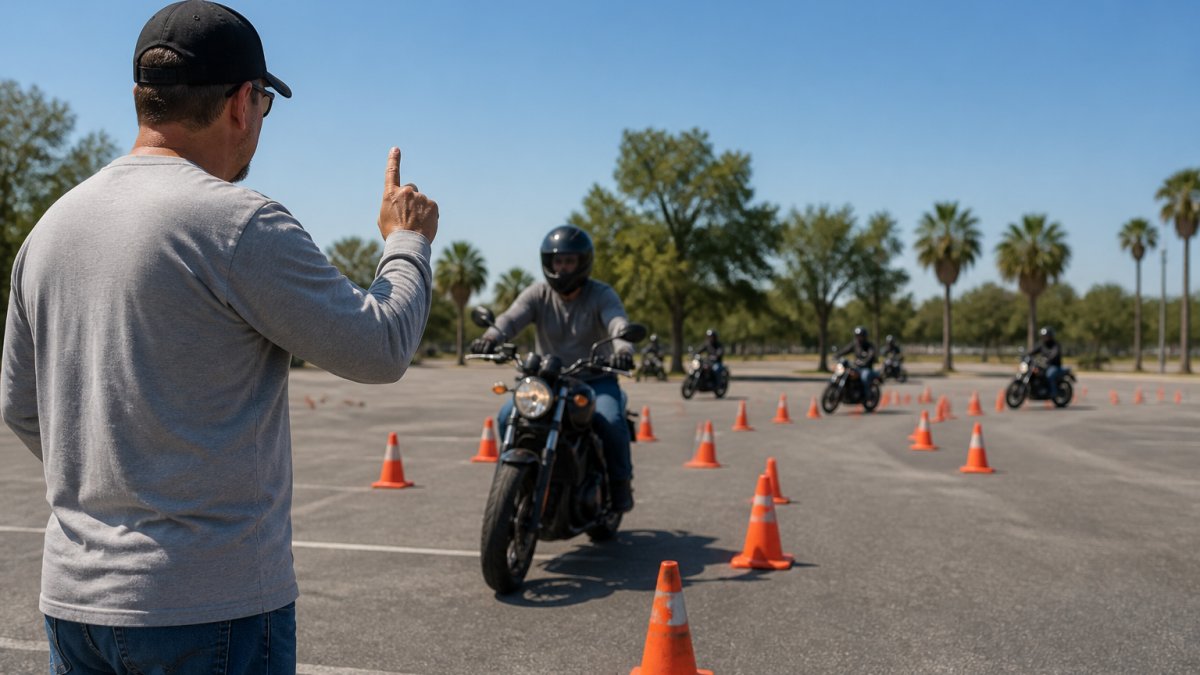
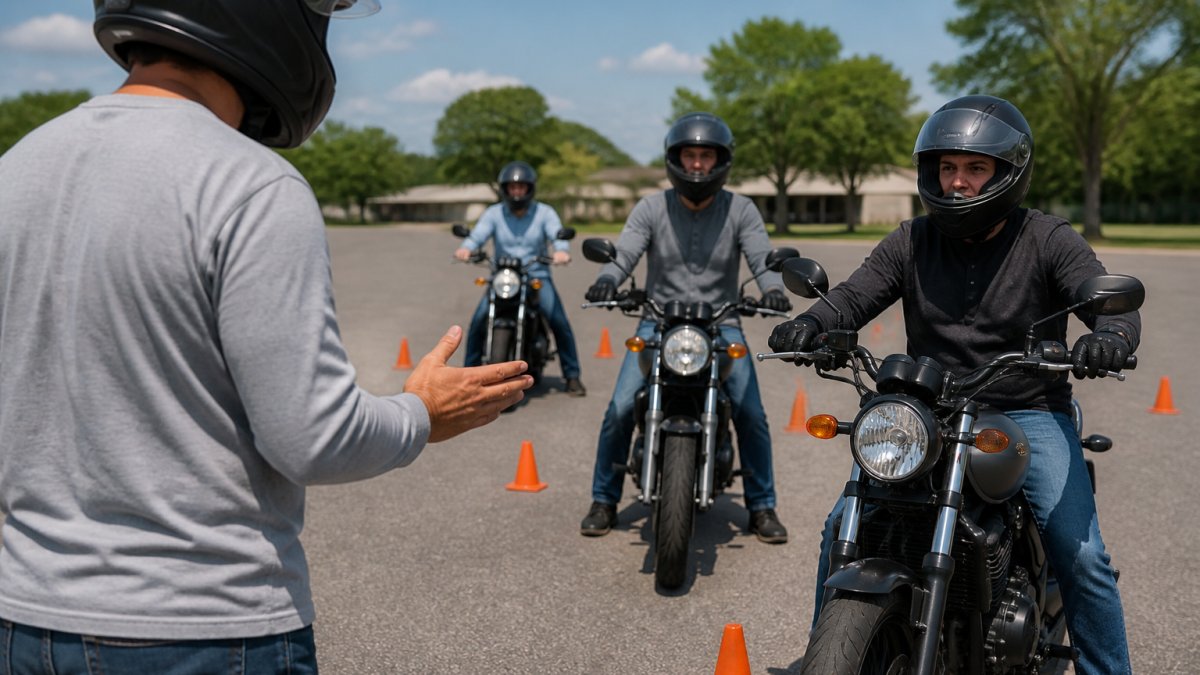
- Class size. Small groups mean more individual correction. Our classes cap at eight students.
- Motorcycles provided. You should not need to own or transport a bike to complete a beginner course.
- Instructor credentials. Certified instructors are trained to spot the specific errors new riders make and correct them early.
- Range quality. A dedicated paved training range beats a repurposed parking lot.
- Course materials. A recognized program includes structured classroom content, not just a safety talk.
Read reviews for patterns, not just star ratings. Repeated mentions of patient instructors and clear explanations matter more than a single glowing comment.
What the MSF Basic RiderCourse Covers
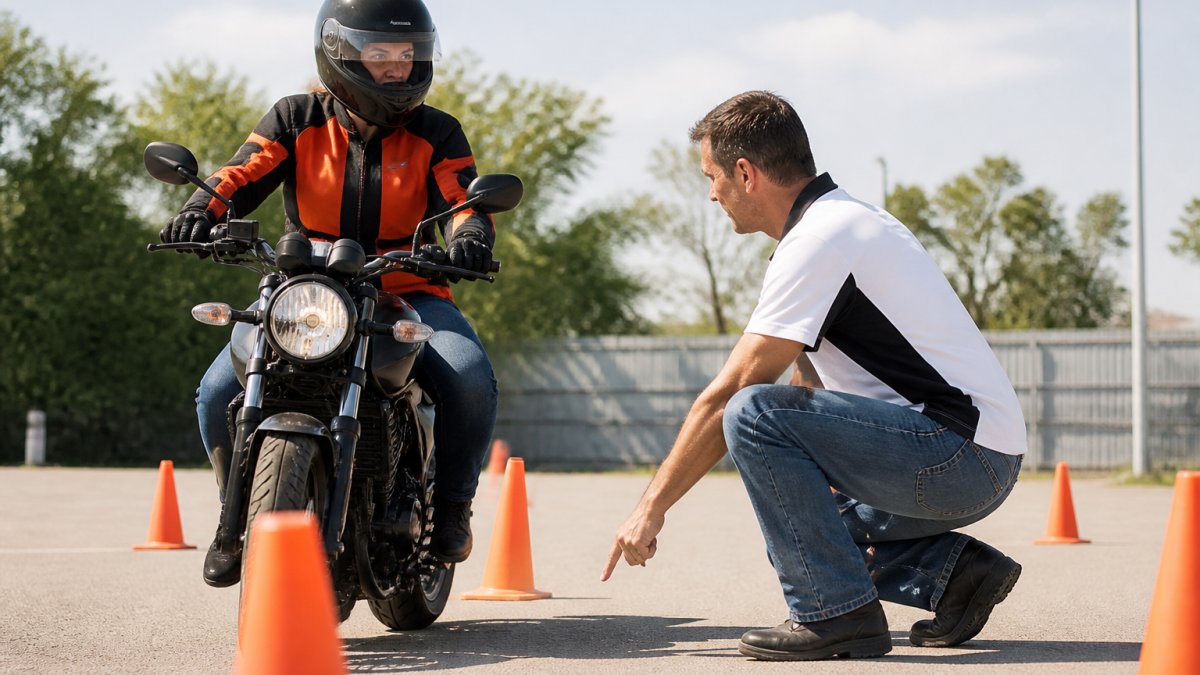
The MSF Basic RiderCourse is the entry-level program most Florida riders use to earn their endorsement. It combines classroom or online theory with supervised riding practice on a closed range.
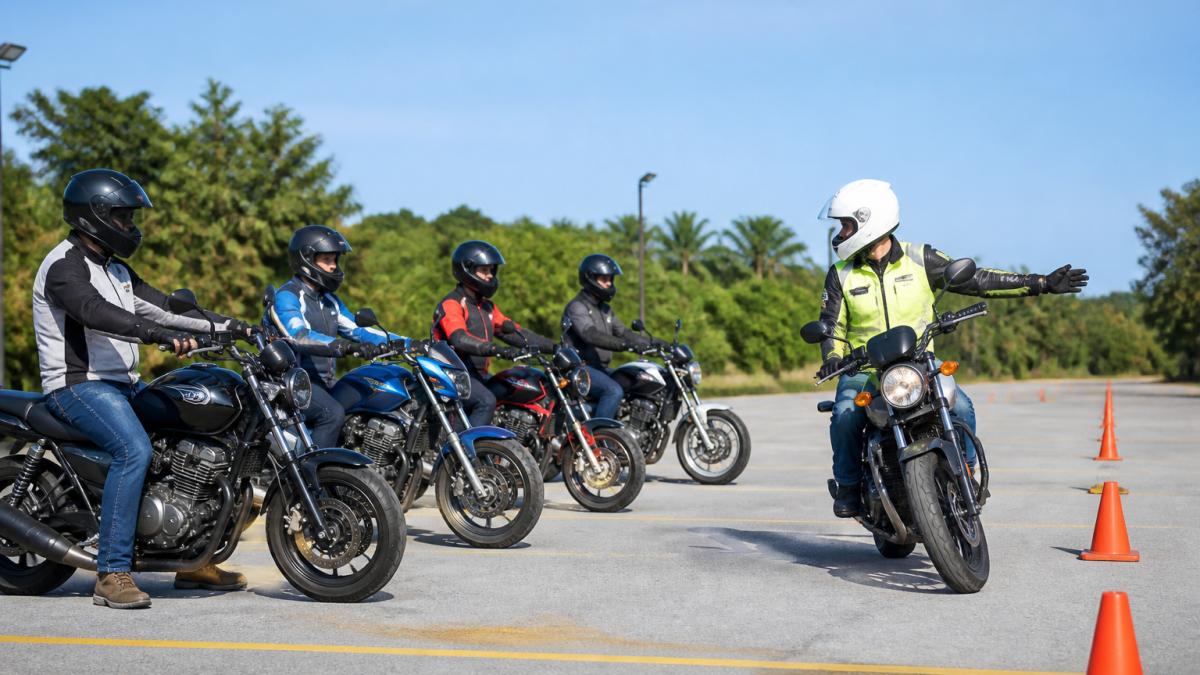
Classroom and Range Sessions
The classroom portion, delivered through the MSF eCourse, covers risk awareness, lane positioning, braking technique, and how alcohol and fatigue affect judgment. You complete this before or alongside the riding days.
The range portion is where the real learning happens. Riders practice:
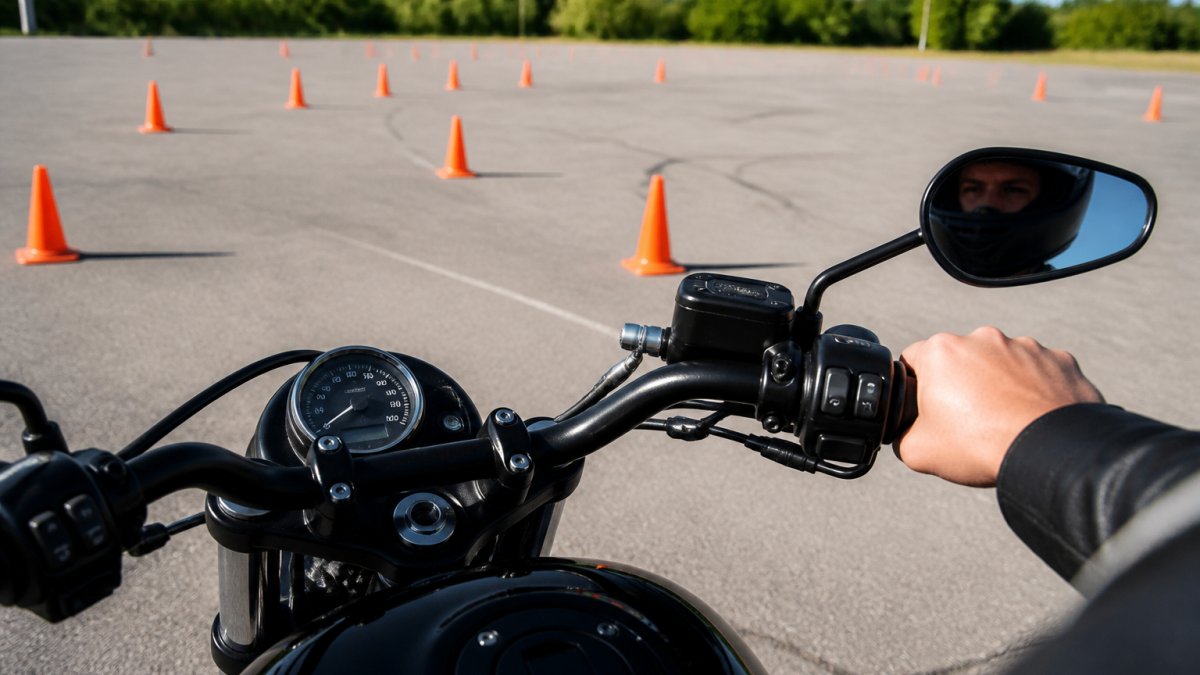
- Clutch control and slow-speed balance
- Straight-line riding, shifting, and stopping
- Turning, swerving, and emergency braking
- Merging, lane changes, and road-strategy drills
The course runs roughly two days. That pace works because each exercise builds directly on the last, and instructors correct errors in real time rather than after the fact.
Why a Beginner Motorcycle Riding Course Builds Confidence
A beginner motorcycle riding course replaces guesswork with repetition. Nervousness almost always comes from not knowing what the bike will do, and the range is designed to answer that question safely.
What most guides miss is that confidence is not a personality trait. It is the byproduct of having stalled, wobbled, and recovered a dozen times in a controlled setting before you ever face traffic.
Students tell us the same thing after day one: the fear was mostly unfamiliarity.
How a Florida Motorcycle Endorsement Course Works
A Florida motorcycle endorsement course is the approved training path that lets you add the motorcycle endorsement (the "M" endorsement) to your existing driver license without taking the state riding skills test separately at a driver license office. Completion documentation from an approved provider is what grants that exemption.
The sequence generally looks like this:
- Confirm you meet the prerequisites: you must hold a valid Florida driver license or learner's permit, and riders under 18 must have parental consent and a helmet requirement that applies regardless of age until the endorsement is issued.
- Enroll in an approved course and complete the MSF eCourse portion, which covers risk awareness, lane positioning, braking, and impairment.
- Attend the range sessions and demonstrate the required riding skills, including clutch control, slow-speed balance, swerving, and emergency braking.
- Pass the course's written and riding evaluations.
- Submit your completion card when you apply for the endorsement at a tax collector's office, along with your license and proof of identity.
Two course paths matter here. The MSF Basic RiderCourse is the entry-level option for riders with little or no experience and is the one most people use to earn the endorsement. The MSF Basic RiderCourse 2 is a shorter, one-day range-only course built for riders who already operate a motorcycle and just need the skills evaluation and completion card. Choosing the wrong one wastes a weekend or leaves you underprepared. Securing your bike properly involves more than just mastering these maneuvers, as reliable motorcycle key services ensure you remain mobile even if you misplace your only set of keys.
The endorsement exemption only applies if the course is approved through the Florida Rider Training Program. A course that is not tied into the state program will not produce documentation the tax collector will accept, and you will still have to pass the state riding skills test. Confirm approval before you pay.
Register for the Basic Rider Course →
Requirements and paperwork can change, so confirm the current steps with the Florida Department of Highway Safety and Motor Vehicles before your appointment.
Motorcycle Safety Foundation rider training overview
Motorcycle Safety Course Cost: What Affects the Price
Motorcycle safety course cost varies by provider, and the sticker price rarely tells the whole story. What you pay reflects what is bundled in, so the useful move is to price the whole package rather than compare headline numbers.
A typical beginner course in this market bundles four things: the MSF eCourse, the motorcycle, the range time, and the completion card. Providers that quote a low base price often bill the eCourse, the bike, or a retest separately, which is how a "cheap" class ends up costing more than a bundled one.
The main factors that move the price:
- Whether the motorcycle is provided or you bring your own
- Whether the MSF eCourse is included or billed separately
- Class size and instructor-to-student ratio
- Range rental and facility costs
- Retest or repeat-session policies
Because pricing depends on the provider, the course format, and what is included, we do not publish a flat figure. The honest answer is that a course bundling the bike, the eCourse, and certified instruction costs more up front than a bare-bones class.
| What to Compare | Why It Matters | Question to Ask |
|---|---|---|
| Motorcycle provided | Avoids renting or transporting a bike | Is a bike included in the fee? |
| MSF eCourse included | Some providers bill it separately | Is the eCourse part of the price? |
| Class size | Smaller groups mean more feedback | How many students per instructor? |
| Retest policy | Affects your total cost if you need a second attempt | What happens if I need to retake? |
| Credentials | Determines endorsement eligibility | Are you FRTP-approved? |
When you request a quote, ask for the out-the-door number in writing: base fee, eCourse, bike, gear if provided, and the retest charge. That single number is the only fair comparison between providers.
What to Bring and How to Enroll
Enrollment is straightforward once you know what to expect. Most riders complete the whole process in a single booking.
What to bring on range days:
- A DOT-approved helmet (or confirm one is provided)
- Eye protection
- Gloves
- Over-the-ankle boots
- Long pants and a long-sleeved shirt or jacket
- Your completion of the MSF eCourse
- Water and sunscreen for outdoor sessions
Prerequisites are minimal: you need a valid driver's license or permit, basic physical ability to balance and control a motorcycle, and the willingness to follow instruction. No prior riding experience is required.
To register for our Basic Rider Course, visit the Tampa Motorcycle Training registration page. Classes fill quickly on weekends, so book ahead if you have a target date.
Frequently Asked Questions
How much does a motorcycle safety course cost near Brandon?
Course pricing varies by provider and what is included, such as use of a training motorcycle, helmet, and the MSF eCourse. Some schools bundle the eCourse and range sessions into one fee, while others charge separately. Because motorcycle safety course cost depends on these factors, check with Tampa Motorcycle Training for current pricing and what your registration covers before you book.
Do I need my own motorcycle for a beginner motorcycle riding course?
No. Many beginner courses, including the MSF Basic RiderCourse, provide motorcycles for the range sessions. That means you do not need to own or insure a bike before your first class. You will still need to bring your own protective gear, such as a DOT-approved helmet, gloves, over-the-ankle boots, long pants, and eye protection. Confirm loaner bike availability when you enroll.
Can a motorcycle training class help me get a Florida motorcycle endorsement?
Yes. Completing an approved Florida motorcycle endorsement course, such as the MSF Basic RiderCourse through a certified Florida Rider Training Program provider, can waive the riding skills test at the DMV. You still need to pass the written knowledge test and meet other licensing requirements. After finishing the course, bring your completion card to the tax collector's office to add the endorsement to your license.
What should I bring to my first motorcycle class?
Bring a DOT-approved helmet, eye protection, full-finger gloves, a long-sleeved shirt or jacket, long pants, and over-the-ankle boots. Also bring water, sunscreen, and your course confirmation. Some providers loan helmets, so ask in advance. Arrive early to complete paperwork. If you are unsure about gear requirements, contact the training center before your class date to confirm what is provided and what you must supply.
Finding motorcycle training classes near Brandon that actually prepare you for the road comes down to credentials, class size, and what is included in the fee. At Tampa Motorcycle Training, our MSF-certified Basic Rider Course runs in two days with motorcycles provided, small classes capped at eight students, and the MSF eCourse built in, so you can earn your Florida motorcycle endorsement and skip the DMV riding skills test. Register now and start riding with confidence.